Understanding Thermosetting Plastics: A Comprehensive Guide
This guide provides a factual overview of thermosetting plastics, commonly referred to as thermosets. It aims to explain their fundamental properties, manufacturing processes, applications, and advantages and disadvantages, offering a clear understanding of this important class of polymers.
Thermosetting plastics are a group of polymers that undergo an irreversible chemical change when heated, transforming from a liquid or malleable state into a rigid, infusible, and insoluble solid. Unlike thermoplastics, which can be repeatedly melted and molded, thermosets are permanently set once cured. This fundamental difference stems from their molecular structure.
Molecular Structure: A Network of Bonds
The defining characteristic of thermosetting plastics is their molecular architecture. During the curing process, individual polymer chains, which are initially linear or branched, link together through strong covalent bonds. This cross-linking process creates a three-dimensional, rigid network structure. Imagine knitting a sweater: the yarn represents the polymer chains. When you knit, you create loops and interconnections. Thermosetting plastics are like that sweater, but instead of yarn loops, the interconnections are robust chemical bonds that hold the entire structure together. This network prevents the polymer chains from sliding past each other when subjected to heat, which is why thermosets do not melt.
The Curing Process: A Chemical Transformation
The transformation of a thermosetting resin from its initial uncured state to a hardened product is known as curing. This process involves a chemical reaction, typically initiated by heat, but sometimes by catalysts or radiation. During curing, monomers or prepolymers react to form covalent cross-links between polymer chains. This can occur through various mechanisms, such as addition polymerization, condensation polymerization, or ring-opening polymerization. The curing process is essentially a permanent chemical weld that locks the polymer into its final shape.
Types of Curing Mechanisms
- Addition Polymerization: This involves the direct addition of monomers to a growing polymer chain, with no byproducts. Examples include epoxy resins and unsaturated polyesters. The reactive groups on the monomers open up and link together.
- Condensation Polymerization: This process involves the reaction between monomers, with the elimination of a small molecule, such as water or alcohol, as a byproduct. Phenolic resins and polyurethanes are examples. The joining of monomers releases a molecule.
- Ring-Opening Polymerization: Certain cyclic monomers can polymerize by opening their rings and forming linear chains, which then cross-link. Epoxy resins can also be cured via this mechanism.
Factors Influencing Curing
The curing process is influenced by several factors:
- Temperature: Heat is often required to provide the activation energy for the cross-linking reaction to proceed at a practical rate. The optimal curing temperature depends on the specific resin system.
- Time: The duration of the heating cycle is critical. Insufficient curing time leads to an under-cured product with poor mechanical properties. Over-curing can sometimes degrade the material.
- Catalysts/Initiators: These substances accelerate the curing reaction by lowering the activation energy. They are essential for achieving practical cure rates at reasonable temperatures.
- Pressure: In some processes, pressure is applied to ensure good contact between mold surfaces and the resin, and to expel any trapped air.
Thermosetting plastics are a fascinating area of materials science, known for their durability and heat resistance. For those interested in learning more about the applications and characteristics of these materials, a related article can be found at Overmold Express. This resource provides valuable insights into the manufacturing processes and benefits of thermosetting plastics, making it a great starting point for anyone looking to deepen their understanding of this important topic.
Key Properties of Thermosetting Plastics
The cross-linked molecular structure of thermosets bestows upon them a unique set of properties that differentiate them from thermoplastics. These properties make them suitable for demanding applications where strength, stability, and resistance are paramount.
Mechanical Strength and Rigidity
One of the most significant advantages of thermosetting plastics is their exceptional mechanical strength and rigidity. The extensive network of covalent cross-links restricts the movement of polymer chains, making them resistant to deformation under stress. They possess high tensile strength, compressive strength, and flexural strength. This makes them an excellent choice for structural components and load-bearing applications. Think of a thermoset as a carefully constructed bridge, where each element is strongly connected to its neighbors, capable of supporting significant weight.
Thermal Stability and Heat Resistance
Thermosets exhibit superior thermal stability and resistance to heat compared to most thermoplastics. Due to the strong covalent bonds that form the cross-linked network, they do not soften or melt at elevated temperatures. Instead, they tend to degrade or char at very high temperatures. This property makes them ideal for applications where exposure to heat is expected, such as in engine components, cookware handles, and electrical insulation. They can withstand higher operating temperatures without losing their structural integrity.
Chemical Resistance
The dense, cross-linked structure of thermosets makes them highly resistant to a wide range of chemicals, including solvents, acids, and bases. The covalent bonds are not easily broken by chemical attack. This resistance is crucial for applications in harsh chemical environments, such as chemical processing equipment, storage tanks, and protective coatings.
Electrical Insulation Properties
Many thermosetting plastics are excellent electrical insulators, meaning they do not readily conduct electricity. This property is attributed to their molecular structure, which lacks free electrons or ions that can move and carry charge. This makes them indispensable in the electrical and electronics industries for components like circuit boards, insulators, and housings for electrical devices.
Dimensional Stability
Once cured, thermosets generally maintain their shape and dimensions over a wide range of temperatures and humidity levels. The irreversible cross-linking process locks the molecular structure, preventing significant expansion or contraction. This dimensional stability is vital for precision components and applications where maintaining tight tolerances is necessary.
Manufacturing Processes for Thermosetting Plastics

The manufacturing of thermosetting plastics involves molding the uncured resin into the desired shape, followed by a curing process. Various molding techniques are employed, each suited to specific resin systems, part geometries, and production volumes.
Compression Molding
In compression molding, a pre-measured amount of thermosetting molding compound (often in the form of a powder, pre-form, or putty) is placed into a heated mold cavity. The mold is then closed under high pressure, forcing the material to fill the cavity and cure simultaneously. This is a straightforward and cost-effective process for producing parts with good surface finish and mechanical properties.
Transfer Molding
Transfer molding is a variation of compression molding. The thermosetting material is first heated and plasticized in a separate chamber and then forced (transferred) under pressure through sprues and runners into a closed, heated mold cavity. This method is suitable for producing more intricate parts with thinner sections and closer dimensional tolerances than compression molding. It also allows for the molding of inserts within the part.
Injection Molding
While thermoplastics are predominantly injection molded, certain thermosetting resins can also be processed using modified injection molding techniques. In thermoset injection molding, the material is injected into a heated mold cavity where curing occurs. This process is typically carried out at lower injection pressures and higher mold temperatures compared to thermoplastic injection molding to prevent premature curing in the injection barrel. It offers high production rates and excellent precision.
Reaction Injection Molding (RIM)
Reaction injection molding is a process where two or more reactive liquid components are mixed and immediately injected into a mold. The components react and cure within the mold, forming the final solid part. RIM is particularly well-suited for producing large, complex parts with good mechanical properties, such as automotive bumpers and dashboards. The process is characterized by low viscosity reactants, rapid curing, and the ability to mold parts with varying wall thicknesses.
Filament Winding
Filament winding is a process used to manufacture composite structures, such as pipes, tanks, and pressure vessels. Continuous filaments (often made of glass, carbon, or aramid fibers) are impregnated with a liquid thermosetting resin and then wound onto a rotating mandrel in a specific pattern. The wound structure is then cured, typically by heat. This method is excellent for producing high-strength, lightweight cylindrical or spherical components.
Pultrusion
Pultrusion is a continuous manufacturing process used to produce composite profiles with constant cross-sections, such as rods, beams, and channels. Reinforcing fibers are pulled through a resin bath, where they are impregnated with a liquid thermosetting resin. The impregnated fibers then pass through a heated die, which shapes the profile and cures the resin. This process is efficient for producing long, strong, and lightweight structural components.
Common Types of Thermosetting Plastics

A variety of thermosetting resins are used across numerous industries, each with its own distinctive characteristics and applications. Understanding these different types is crucial for selecting the appropriate material for a given need.
Epoxy Resins
Epoxy resins are a versatile class of thermosets known for their excellent adhesion, chemical resistance, and mechanical strength. They are formed by the reaction of epichlorohydrin with bisphenol A or other polyols. Epoxies are widely used in adhesives, coatings, composites, electrical encapsulation, and structural applications. Their ability to bond to a wide range of substrates makes them invaluable.
Phenolic Resins (Resole and Novolac)
Phenolic resins, often referred to as Bakelite, were among the first synthetic plastics. They are produced from the reaction of phenol with formaldehyde. Phenolic resins offer good thermal stability, flame resistance, and electrical insulation properties. They are commonly found in electrical components, automotive parts, cookware handles, and laminates.
Unsaturated Polyesters
Unsaturated polyester resins are widely used in composite materials, particularly with fiberglass reinforcement. They are known for their good mechanical properties, chemical resistance, and ease of processing. Applications include boat hulls, automotive body panels, pipes, and tanks.
Silicone Resins
Silicone resins are characterized by their inorganic silicon-oxygen backbone with organic side groups. This unique structure provides them with exceptional thermal stability over a wide temperature range, flexibility, and resistance to weathering and UV radiation. They are used in sealants, adhesives, coatings, medical implants, and high-temperature electrical insulation.
Polyurethanes (Thermosetting Types)
While some polyurethanes are thermoplastic, thermosetting polyurethanes are formed through the reaction of isocyanates with polyols, leading to cross-linking. These materials offer a good balance of flexibility, abrasion resistance, and toughness. They are found in coatings, adhesives, sealants, foams, and elastomers.
Other Thermosetting Resins
- Melamine Formaldehyde (MF): Known for its hardness, scratch resistance, and stain resistance, used in decorative laminates (e.g., countertops) and dinnerware.
- Urea Formaldehyde (UF): Offers good electrical insulation and hardness but is less resistant to moisture than melamine; used in adhesives, electrical fittings, and decorative laminates.
- Polyimides: Exhibit exceptional thermal stability, mechanical strength at high temperatures, and good electrical properties; used in aerospace, electronics, and high-performance insulation.
Thermosetting plastics are known for their durability and resistance to heat, making them ideal for various applications in industries such as automotive and electronics. For those interested in exploring the benefits and processes involved in overmolding, a related article can provide valuable insights. You can read more about this innovative technique and how it enhances the performance of thermosetting plastics by visiting this link. Understanding these processes can help in selecting the right materials for specific engineering needs.
Applications of Thermosetting Plastics
| Property | Typical Value | Unit | Description |
|---|---|---|---|
| Glass Transition Temperature (Tg) | 150 – 250 | °C | Temperature range where the plastic transitions from a hard, glassy material to a soft, rubbery state |
| Heat Resistance | 200 – 300 | °C | Maximum continuous service temperature |
| Density | 1.2 – 1.5 | g/cm³ | Mass per unit volume |
| Tensile Strength | 50 – 120 | MPa | Resistance to breaking under tension |
| Flexural Strength | 80 – 150 | MPa | Resistance to bending forces |
| Electrical Insulation | High | – | Ability to resist electrical conduction |
| Curing Time | 5 – 60 | minutes | Time required for the thermosetting reaction to complete |
| Water Absorption | 0.1 – 0.5 | % | Percentage of water absorbed under standard conditions |
The unique combination of properties offered by thermosetting plastics makes them indispensable in a vast array of industries. Their ability to withstand demanding conditions ensures their continued use in various critical applications.
Automotive Industry
Thermosets are extensively used in the automotive sector for their lightweight, high strength, and impact resistance. Examples include body panels, bumpers, interior components, engine covers, and structural parts. Their ability to be molded into complex shapes and their resistance to heat and chemicals are highly valued.
Aerospace Industry
In aerospace, thermosets are crucial for producing lightweight yet strong composite materials. Carbon fiber reinforced polymers, often using epoxy resins, are found in aircraft structures, wings, fuselages, and interior components, contributing to fuel efficiency and performance. Their high strength-to-weight ratio is a significant advantage.
Electrical and Electronics Industry
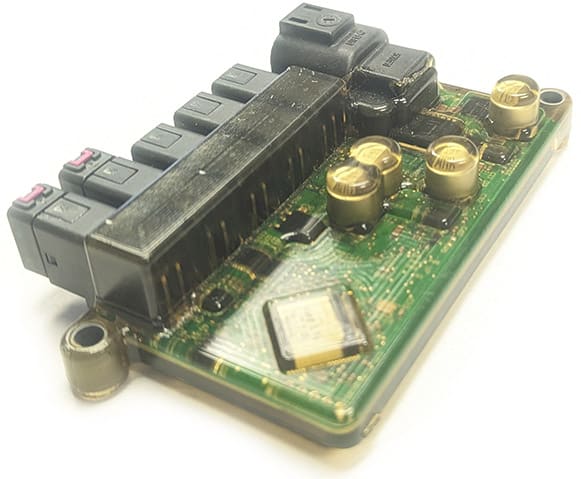
The excellent electrical insulation properties of thermosets make them essential for various electrical and electronic applications. They are used for circuit boards (e.g., FR-4 uses epoxy resin), housings for electrical devices, insulators, connectors, and encapsulating materials for sensitive electronic components. Their thermal stability also plays a role here.
Construction Industry
Thermosetting plastics find applications in construction for their durability, chemical resistance, and weatherability. They are used in pipes, tanks, coatings, adhesives, sealants, and composite structural elements. Their resistance to corrosion and degradation makes them suitable for demanding environmental conditions.
Consumer Goods
Many everyday items utilize thermosetting plastics. Examples include handles for cookware, electrical appliance housings, buttons, and durable components in furniture and sporting goods. Their ability to hold color and withstand wear and tear makes them practical for these applications.
Adhesives and Coatings
Thermosetting resins, particularly epoxies and polyurethanes, are widely used as high-performance adhesives and protective coatings. They provide strong bonds between various materials and offer excellent resistance to a wide range of environmental factors, chemicals, and abrasion.
Thermosetting plastics are known for their durability and resistance to heat, making them ideal for a variety of applications in industries such as automotive and electronics. For those interested in exploring the manufacturing processes and benefits of these materials, a related article can provide valuable insights. You can learn more about this topic by visiting this informative resource. Understanding the properties and applications of thermosetting plastics can significantly enhance your knowledge in material science and engineering.
Advantages and Disadvantages of Thermosetting Plastics
Like all materials, thermosetting plastics have their strengths and weaknesses. Understanding these factors is essential for making informed material selection decisions.
Advantages
- High Strength and Rigidity: The cross-linked structure provides excellent mechanical properties.
- Excellent Thermal Stability: They can withstand higher temperatures without deforming or degrading.
- Superior Chemical Resistance: They are resistant to a wide range of chemicals and solvents.
- Good Electrical Insulation: Many thermosets are excellent insulators.
- Dimensional Stability: They maintain their shape and size under varying conditions.
- Creep Resistance: They resist gradual deformation under sustained load.
Disadvantages
- Non-Recyclable: Due to their cross-linked structure, thermosets cannot be melted and reprocessed like thermoplastics. Recycling often involves grinding them down for use as filler material or energy recovery through incineration, which can be challenging.
- Difficult to Repair: Once a thermoset part is damaged, it is generally difficult to repair without significantly compromising its structural integrity.
- Brittleness (in some formulations): While strong, some thermosets can be brittle and prone to fracture if not formulated correctly for the intended application.
- Processing Challenges: Curing requires specific temperatures and times, and the process can sometimes generate byproducts, requiring careful ventilation. Pre-production waste is also difficult to reuse.
- Higher Tooling Costs: The complexity and precision required in thermoset molding can sometimes lead to higher initial tooling costs.
In conclusion, thermosetting plastics are a crucial class of materials characterized by their permanent, cross-linked molecular structure, which imparts exceptional mechanical strength, thermal stability, and chemical resistance. While their inability to be easily recycled presents a challenge, their performance advantages make them indispensable for a vast array of demanding applications across numerous industries.
Give us a call to discuss your next project
FAQs
What is thermosetting plastic?
Thermosetting plastic is a type of polymer that becomes irreversibly hard and rigid when heated and cured. Unlike thermoplastics, it cannot be remelted or reshaped after curing.
How is thermosetting plastic different from thermoplastic?
Thermosetting plastics undergo a chemical change during curing that creates a cross-linked structure, making them hard and heat-resistant. Thermoplastics, on the other hand, can be melted and reshaped multiple times without undergoing a chemical change.
What are common uses of thermosetting plastics?
Thermosetting plastics are widely used in electrical insulation, adhesives, coatings, automotive parts, and kitchenware due to their durability, heat resistance, and structural strength.
Can thermosetting plastics be recycled?
Thermosetting plastics are difficult to recycle because they cannot be remelted. Recycling typically involves mechanical grinding for use as fillers or energy recovery through incineration.
What are some examples of thermosetting plastics?
Common examples include epoxy resins, phenolic resins, melamine formaldehyde, and urea formaldehyde. These materials are valued for their mechanical strength and thermal stability.