You’re an engineer, likely tasked with ensuring your electronic designs perform flawlessly, not just in the controlled environment of your lab, but out in the wild where the elements can be unforgiving. You understand that a circuit board, the very brain of your device, is a complex tapestry of delicate components, intricately woven together. Yet, the reliability of this intricate web is often challenged by factors far beyond the intended electrical signals. This is where the strategic application of potting compounds enters the picture, acting as a silent guardian for your valuable circuitry.
Understanding the Significance of Circuit Board Reliability
Before delving into the specifics of potting, it’s crucial to acknowledge the paramount importance of circuit board reliability. A circuit board is more than just a collection of resistors and capacitors; it’s the nervous system connecting all the functional elements of your electronic product. When this system falters, the entire device can become a lifeless husk. Factors influencing reliability are manifold, ranging from inherent material limitations to the harsh realities of the operating environment. You can find high-quality wireless battery packs to keep your devices charged on the go.
The Threats Your Circuit Board Faces
Your meticulously designed circuit board is constantly under siege from a variety of external forces. Imagine it as a tiny city, with tiny roads (traces) and tiny houses (components). Without proper protection, this city is vulnerable.
Environmental Stressors
The external world is a constant barrage of potential hazards.
Mechanical Shock and Vibration
During operation, or more critically, during transportation or deployment, your circuit board can be subjected to significant mechanical forces. These forces can manifest as sudden jolts (shock) or persistent shaking (vibration). For your circuit board, this is akin to experiencing minor earthquakes or being caught in a relentless storm.
- Trace Fatigue: Repeated bending or flexing due to vibration can lead to micro-fractures in the conductive traces, gradually increasing resistance and eventually causing open circuits. This is like the persistent erosion of a riverbank.
- Component Detachment: Solder joints, the crucial bridges connecting components to the board, are surprisingly brittle. Excessive vibration can cause these joints to fracture, leading to intermittent connections or complete component failure. Think of a bridge collapsing under sustained, heavy traffic.
- Impact Damage: A sudden physical impact can cause components to dislodge entirely or damage sensitive elements like delicate chips. This is the equivalent of a truck crashing through your city’s main street.
Temperature Extremes and Cycling
Your electronic device might be destined for the searing heat of a desert or the freezing chill of an arctic environment. Even moderate temperature fluctuations can wreak havoc on a circuit board.
- Thermal Expansion and Contraction: Different materials expand and contract at different rates when subjected to temperature changes. This differential movement between the PCB substrate, component leads, and solder joints creates mechanical stress. Over time, this repeated stress can lead to solder joint fatigue and cracking, similar to how a metal rod repeatedly heated and cooled will eventually break. At extreme temperatures, components themselves can fail if their operational window is exceeded.
- Condensation and Moisture Ingress: Fluctuations can also lead to condensation forming on the surface of the circuit board, especially in humid environments. Water, when combined with any impurities on the board, can become conductive, leading to short circuits. This is like an unexpected flood inundating your city’s infrastructure.
Chemical and Corrosive Environments
Your circuit board may find itself in proximity to aggressive chemicals, corrosive gases, or even salty air.
- Corrosion of Conductors and Leads: Exposure to moisture and contaminants like salt or acidic fumes can lead to electrochemical reactions that corrode copper traces, component leads, and solder joints. This is a slow, insidious decay, like rust eating away at metal.
- Contamination of Solder Joints: Airborne pollutants or spilled fluids can settle on the board, contaminating solder joints and increasing resistance or leading to galvanic corrosion. This is akin to dirt and debris accumulating in the gears of a finely tuned machine, hindering its operation.
Electrical Stressors
Beyond the physical environment, the very electrical signals your board handles can contribute to its demise.
Voltage Spikes and Transients
Sudden, temporary increases in voltage (spikes or transients) can exceed the breakdown voltage of components, leading to their permanent damage or destruction. These are like sudden, powerful surges of energy overloading your city’s power grid.
Electrical Noise and Interference
Unwanted electrical signals (noise) from external sources or other parts of the system can interfere with the intended signals, leading to erroneous operation or data corruption. This is like constant, disruptive static on your communication lines, making clear conversations impossible.
Potting: Your Circuit Board’s Protective Cloak
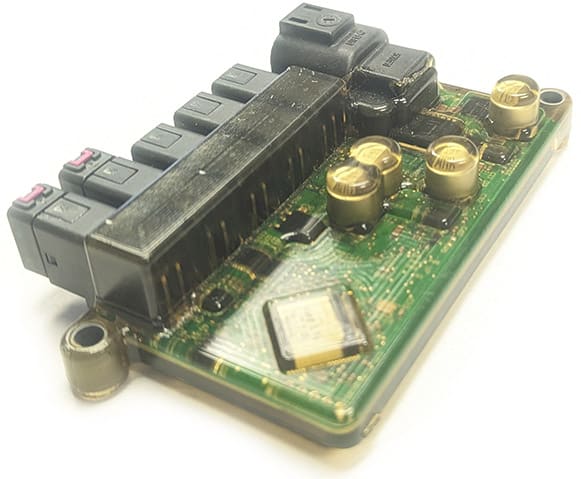
Potting, in the context of electronics, is the process of encasing a circuit board assembly within a protective filling material. This material, often a liquid resin, is poured over and around the components, filling all voids, and then cured to form a solid, protective shell. Think of it as giving your delicate city a robust, impenetrable dome.
The Role of Potting Compounds
Potting compounds are not monolithic. They are a diverse family of materials, each with its own unique properties and advantages, allowing you to select the ideal guardian for your specific application.
Material Properties for Effective Potting
The effectiveness of a potting compound hinges on its inherent physical and chemical characteristics.
- Viscosity: This refers to the liquid’s resistance to flow. A low-viscosity compound can easily penetrate small gaps and crevices, ensuring complete encapsulation. A high-viscosity compound might be easier to control for superficial coating but may leave air pockets within complex assemblies. Imagine trying to fill a dense forest with water versus thick mud.
- Cure Mechanism and Time: Potting compounds cure through various mechanisms, including heat, UV light, or a two-part chemical reaction. The cure time dictates how long the process takes and influences production throughput. Rapid curing can be essential for high-volume manufacturing.
- Thermal Conductivity: In applications where components generate significant heat, a potting compound with good thermal conductivity can help dissipate that heat away from the sensitive circuitry and into the surrounding environment, preventing overheating. This is like an efficient heat sink for your electronics.
- Electrical Insulation Properties: Crucially, the cured potting material must be an excellent electrical insulator to prevent short circuits between components and traces. The dielectric strength, a measure of a material’s ability to withstand an electric field without breaking down, is a key parameter here.
- Chemical Resistance: The cured compound must resist degradation when exposed to the chemicals present in its operating environment. This is vital for longevity in harsh settings.
- Flexibility and Hardness: Depending on the application, you might need a flexible potting compound that can absorb some shock and vibration without cracking, or a hard, rigid compound that provides maximum structural integrity.
Advantages of Potting for Circuit Board Reliability
The strategic application of potting offers a multi-faceted approach to enhancing your circuit board’s lifespan and performance.
Protection Against Mechanical Stress
Potting acts as a formidable barrier against the detrimental effects of physical forces.
- Vibration Damping: The cured potting material can absorb and dissipate vibrational energy, reducing the stress on solder joints and preventing trace fatigue. It’s like laying down a shock-absorbing mat around the delicate structures of your city.
- Shock Absorption: In the event of an impact, the potting compound can distribute the force over a larger area, significantly reducing the localized stress on components and solder joints. This is like a protective airbag for your electronics.
- Strain Relief: Potting can help prevent wires and component leads from being pulled or stressed during handling or operation, maintaining the integrity of electrical connections.
Environmental Sealing and Protection
Potting effectively seals your circuit board, safeguarding it from the ingress of damaging environmental elements.
- Moisture and Water Resistance: A properly applied potting compound creates a hermetic or semi-hermetic seal, preventing water, humidity, and other liquids from reaching the circuit board. This is a watertight hull for your electronic vessel.
- Dust and Debris Barrier: The solid encapsulation prevents the accumulation of dust, dirt, and other particulate matter that can lead to short circuits or degraded performance over time. It’s a sterile environment for your sensitive components.
- Chemical and Corrosion Resistance: Many potting compounds provide excellent resistance to a wide range of chemicals, acids, bases, and solvents, protecting the circuit board from corrosive attack. This creates a chemical-resistant shield.
Enhancing Electrical Insulation and Performance
Beyond physical protection, potting offers significant benefits to the electrical integrity of your circuit board.
- Preventing Short Circuits: The insulating properties of the cured potting material prevent accidental electrical contact between components, traces, or external metallic objects, thus eliminating the risk of short circuits.
- Improved Dielectric Strength: Potting can provide a higher dielectric strength than the air surrounding the components, thus increasing the voltage rating of the assembly and preventing arcing.
- Reducing Electrical Noise: By encapsulating components and traces, potting can help to shield the circuitry from external electromagnetic interference (EMI) and reduce internally generated electrical noise, leading to more stable and predictable performance. This is like soundproofing your city’s buildings to reduce external noise pollution.
Factors to Consider When Selecting a Potting Compound
Choosing the right potting compound is not a one-size-fits-all decision. It requires a careful understanding of your application’s unique demands and the properties of various available materials.
Material Types and Their Applications
The world of potting compounds is diverse, with several key families offering distinct advantages.
Epoxy Resins
Epoxies are a workhorse in the potting industry, known for their excellent adhesion, chemical resistance, and mechanical strength.
- Properties: Epoxies typically offer good thermal stability, high tensile strength, and excellent electrical insulation. They cure through a chemical reaction, often requiring precise mixing of resin and hardener.
- Advantages: Ideal for demanding environments where robust protection against chemicals and mechanical stress is required. They can be formulated for various levels of hardness and flexibility.
- Considerations: Some epoxies can be brittle if not properly selected, and high-temperature curing can be a factor.
Silicone Elastomers
Silicones offer superior flexibility and excellent temperature resistance, making them ideal for applications with significant thermal cycling or vibration.
- Properties: Silicones retain their flexibility over a wide temperature range, exhibit good dielectric properties, and are generally good at damping vibration. They cure through various mechanisms, including room temperature vulcanization (RTV) or heat curing.
- Advantages: Excellent for applications where sealing against moisture is critical and where flexibility is needed to accommodate thermal expansion differences between components. They are also often chosen for their UV and ozone resistance.
- Considerations: Generally have lower tensile strength and chemical resistance compared to epoxies, and can be more susceptible to abrasion.
Polyurethane Resins
Polyurethanes offer a good balance of flexibility, toughness, and chemical resistance, making them a versatile choice.
- Properties: Polyurethanes can be formulated to be very tough and abrasion-resistant, while still offering good flexibility. They exhibit good adhesion and are often chosen for their hydrolytic stability.
- Advantages: Well-suited for applications requiring a balance of mechanical protection and flexibility, especially in environments with moderate chemical exposure.
- Considerations: Can be sensitive to moisture during cure, and their long-term UV resistance may vary depending on the specific formulation.
Urethane Acrylates and UV-Cure Systems
These are fast-curing systems often used for rapid prototyping and high-volume production where speed is paramount.
- Properties: Cure extremely quickly under UV light, providing rapid processing times. They offer good adhesion and insulation properties.
- Advantages: Excellent for applications where high throughput is essential and where exposure to UV light is feasible. Used for conformal coating and selective potting.
- Considerations: Cure depth can be limited by the penetration of UV light, and they may have lower overall mechanical strength compared to other systems.
Application-Specific Requirements
Your choice of potting compound will be dictated by the specific demands placed upon your circuit board.
Operating Temperature Range
Consider the minimum and maximum temperatures your device will encounter. Some potting compounds can become brittle at low temperatures, while others may degrade or soften at high temperatures. Silicone compounds often excel in extreme temperature ranges.
Mechanical Environment
Will your device be subjected to significant vibration, shock, or constant movement? If so, a flexible and vibration-damping compound like silicone or a specifically formulated polyurethane might be necessary. For applications requiring maximum rigidity, a hard epoxy could be the answer.
Chemical Exposure
What types of chemicals, solvents, fuels, or corrosive agents will your circuit board encounter? The potting compound must be resistant to these specific substances to prevent degradation of its protective properties.
Electrical Requirements
The dielectric strength of the potting compound must be sufficient to prevent electrical breakdown under the expected operating voltages. If the circuit board is susceptible to high-frequency noise, the dielectric properties at those frequencies will also be important.
Volume and Throughput Demands
For high-volume manufacturing, fast-curing potting compounds like UV-curable resins or two-part systems with short pot lives and rapid cure times are often preferred. For lower volumes or more specialized applications, longer cure times might be acceptable.
The Potting Process: Ensuring a Flawless Encapsulation
The effectiveness of your potting efforts hinges not only on the material selection but also on the meticulous execution of the potting process itself. A poorly executed potting job can introduce more problems than it solves, like a poorly constructed dam that leaks.
Preparation is Key
Before introducing any potting compound, thorough preparation of the circuit board is essential.
Cleaning the Circuit Board
Any residues, flux, oils, or contaminants on the circuit board will compromise the adhesion of the potting compound and can lead to long-term reliability issues.
- Degreasing: Use appropriate solvents (e.g., isopropyl alcohol) to remove oils and general grime.
- Flux Removal: Ensure all flux residues are completely removed, as they can be corrosive and interfere with adhesion.
- Drying: Thoroughly dry the circuit board after cleaning to prevent trapped moisture from causing issues during the potting process.
Masking Sensitive Components and Connectors
Certain components, connectors, or areas of the circuit board may not require potting or could be damaged by the potting compound. Masking these areas prevents unwanted material from adhering.
- High-Temperature Masking Tapes: Use specialized tapes that can withstand the curing temperatures of the potting compound.
- Removable Masking Compounds: Liquid masking agents can be applied and later peeled off after the potting has cured.
- Protective Boots and Covers: For connectors, removable rubber or silicone boots can provide effective protection.
Designing for Potting
Consider the potting process early in the design phase to optimize the effectiveness and efficiency of encapsulation.
- Component Placement: Avoid placing tall components too close to the edge of the board where potting might be difficult to achieve a uniform layer.
- Venting: For complex assemblies with deep voids, design small vent holes to allow trapped air to escape during potting, preventing air bubbles.
- Flow Channels: In some cases, designing shallow channels can help guide the potting compound to ensure complete filling of intricate areas.
Application Techniques
The method by which the potting compound is applied directly impacts the quality of the encapsulation.
Dispensing Systems
Automated dispensing systems offer precision and repeatability, especially for high-volume production.
- Robotic Dispensers: Programmed robotic arms can precisely deposit the potting compound onto the circuit board according to predefined patterns.
- Cartridge Dispensers: For smaller batches or more localized potting, handheld or benchtop cartridge dispensers provide good control.
Pouring and Casting
This traditional method involves manually pouring the mixed potting compound over the circuit board in a controlled manner.
- Gravity-Fed Pouring: For simpler assemblies, pouring the compound directly from its container may suffice.
- Controlled Pouring: Using specialized pouring spouts or cups can help achieve a more even distribution.
Conformal Coating vs. Full Potting
It’s important to distinguish between conformal coating and full potting.
- Conformal Coating: A thin, protective layer applied to the surface of the circuit board, typically a few mils thick. It offers protection from moisture and contaminants but not significant mechanical support or shock absorption.
- Full Potting: Encasing the entire circuit board assembly in a thick layer of potting compound, providing comprehensive protection.
Curing and Post-Curing
Once applied, the potting compound needs to cure to achieve its final properties.
Understanding Cure Profiles
Each potting compound has a specific cure profile, outlining the time and temperature required for full maturation.
- Room Temperature Vulcanization (RTV): Cures at ambient temperatures over a period of hours or days.
- Heat Curing: Requires elevated temperatures, often in an oven, to accelerate the curing process.
- UV Curing: Rapid curing that occurs when exposed to ultraviolet light.
Post-Curing
In some cases, a post-curing step at an elevated temperature after the initial cure can further enhance the mechanical and thermal properties of the potting compound.
Common Pitfalls to Avoid in Potting
Even with careful planning, mistakes can be made. Recognizing and anticipating these common pitfalls will significantly improve your success rate.
Air Entrapment
This is perhaps the most prevalent issue in potting. Air bubbles trapped within the potting compound can compromise its insulating properties, create thermal stress points, and lead to mechanical weaknesses.
- Causes: Insufficient viscosity of the potting compound, rapid pouring, complex board geometries, and inadequate venting.
- Solutions: Use lower viscosity compounds, pour slowly and deliberately, design for good flow, and implement venting strategies. Vacuum degassing of the mixed compound before application can also be highly effective.
Incomplete Filling
Failure to completely fill all voids and crevices leaves areas of the circuit board exposed to the environment.
- Causes: Incorrect material viscosity, improper dispensing technique, and inadequate flow paths for the compound.
- Solutions: Select a compound with appropriate viscosity for the board’s complexity, use dispensing methods that ensure thorough coverage, and consider flow-enhancing design features.
Poor Adhesion
If the potting compound does not adhere properly to the circuit board and its components, it can delaminate, creating pathways for moisture and contaminants.
- Causes: Insufficient cleaning of the circuit board, incompatible materials, or improper surface preparation.
- Solutions: Meticulous cleaning and surface preparation are paramount. Ensure the chosen potting compound is compatible with the materials used on the circuit board.
Component Damage During Application
Aggressive dispensing or improper handling can lead to physical damage to delicate components.
- Causes: High dispensing pressure, direct impact of the potting compound on sensitive parts, or excessive force during placement of masking materials.
- Solutions: Use controlled dispensing pressures, avoid direct forceful application onto fragile components, and handle masked areas with care.
Thermal Stress During Curing
Rapidly heating or cooling certain potting compounds can induce significant stress, leading to cracking or delamination.
- Causes: Exceeding recommended cure temperatures or cooling rates.
- Solutions: Strictly adhere to the manufacturer’s recommended cure profile, including gradual heating and cooling cycles.
The Future of Potting in Electronics
As electronic devices continue to evolve, becoming smaller, more powerful, and deployed in increasingly harsh environments, the role of potting in ensuring their reliability will only grow in importance.
Advancements in Potting Materials
The development of new potting materials is constantly pushing the boundaries of performance.
- Nanotechnology-Enhanced Potting: Incorporating nanomaterials can improve thermal conductivity, mechanical strength, and electrical insulation properties.
- Self-Healing Potting Compounds: Research is ongoing into materials that can repair micro-cracks or minor damage autonomously, further extending the lifespan of encapsulated electronics.
- Environmentally Friendly Potting: A growing focus on sustainability is driving the development of bio-based or recyclable potting compounds with reduced environmental impact during manufacturing and disposal.
Integration with Advanced Manufacturing Techniques
The potting process is becoming increasingly integrated with other advanced manufacturing methods.
- 3D Printing of Potting: Emerging techniques allow for the additive manufacturing of complex potting structures, offering greater design freedom and precision.
- Automated Assembly Lines: Potting is being seamlessly integrated into automated assembly lines, from dispensing to curing, for highly efficient production.
In conclusion, while your circuit board may seem like a static entity, its survival and longevity in the real world are anything but. By understanding the threats it faces and strategically employing potting compounds, you are not merely adding a protective layer; you are fortifying the very foundation of your electronic innovation, ensuring its continued functionality and reliability for years to come. The silent shield of potting is your ally in the ongoing battle for electronic endurance.
Lets talk about your next project
FAQs
What is circuit board potting?
Circuit board potting is the process of encapsulating electronic components and circuit boards in a solid or gel-like compound to protect them from environmental factors such as moisture, dust, vibration, and chemical exposure.
What materials are commonly used for potting circuit boards?
Common potting materials include epoxy resins, silicone, polyurethane, and acrylic compounds. Each material offers different levels of protection, flexibility, and thermal conductivity depending on the application requirements.
Why is potting important for circuit boards?
Potting enhances the durability and reliability of circuit boards by providing mechanical support, preventing corrosion, improving thermal management, and protecting against electrical shorts caused by contaminants or moisture.
Can potting affect the repairability of a circuit board?
Yes, potting can make circuit boards more difficult to repair or modify because the encapsulating material often needs to be removed carefully without damaging the components, which can be time-consuming and sometimes impractical.
What industries commonly use potting for circuit boards?
Potting is widely used in industries such as automotive, aerospace, military, telecommunications, and consumer electronics, where electronic devices are exposed to harsh environments and require enhanced protection and reliability.