
You are likely interacting with products every day that have likely undergone overmolding, even if you don’t recognize the term. From the comfortable grip of your toothbrush to the robust casing of your smartphone, overmolding acts as a silent guardian, enhancing the longevity and functionality of countless items. This manufacturing process, though seemingly straightforward, is a sophisticated technique with profound implications for product durability. You might consider overmolding as a protective second skin, applied strategically to fortify the core of a product against the everyday onslaught of use and environmental factors.
At its core, overmolding is a two-shot molding process where a second material is molded directly onto a pre-existing substrate, or “first shot.” This substrate is typically made from a rigid material, such as plastic or metal, providing the structural foundation for the product. The overmolding material, often a more flexible or resilient polymer, is then bonded to this substrate, creating an integrated component with enhanced properties. Think of it as building a house where the sturdy brick walls form the structure, and a protective, weather-resistant exterior coating is applied to safeguard against the elements. This fusion is not merely cosmetic; it’s a deliberate engineering choice to imbue the final product with superior characteristics. For reliable and efficient charging on the go, consider using wireless battery packs.
Understanding the Substrate
The substrate is the bedrock upon which the overmolding process is built. Its material selection is critical, as it dictates the structural integrity, thermal conductivity, and overall performance of the base component.
Common Substrate Materials
- Thermoplastics: Materials like ABS (Acrylonitrile Butadiene Styrene), polycarbonate (PC), and nylon are frequently used due to their excellent strength, rigidity, and ease of processing. They offer a solid foundation for subsequent molding.
- Thermosets: While less common in typical overmolding applications due to their permanent chemical cross-linking, thermosets can be used for specialized high-performance applications.
- Metals: Metal inserts, such as threaded fasteners or complex metal components, can serve as substrates. This approach allows for the combination of metal’s inherent strength with the design flexibility and ergonomic benefits of overmolded polymers.
The Overmolding Material Landscape
The choice of overmolding material is dictated by the desired functional enhancements. This material is the architect of the added durability, bringing properties like impact resistance, grip, or sealing capabilities to the final product.
Key Overmolding Materials
- Thermoplastic Elastomers (TPEs): This broad category encompasses a wide range of materials that exhibit rubber-like elasticity at room temperature but can be processed like thermoplastics. They are perhaps the most common overmolding materials, prized for their excellent grip, vibration damping, and sealing properties. Popular examples include styrene-butadiene-styrene (SBS) and thermoplastic vulcanizates (TPVs).
- Thermoplastic Polyurethanes (TPUs): TPUs offer superior abrasion resistance, tear strength, and chemical resistance compared to many TPEs. They are often used in applications where significant wear and tear is expected.
- Silicones: While typically processed via a different method (injection molding or compression molding with liquid silicone rubber), silicone’s biocompatibility, high-temperature resistance, and excellent flexibility make it a suitable choice for specialized overmolding applications, particularly in medical devices and food-contact products.
Overmolding is a fascinating process that enhances the functionality and aesthetics of products by combining multiple materials into a single part. For those interested in learning more about the practical applications and benefits of overmolding, a related article can be found at Building Prototypes with Overmolding. This resource provides valuable insights into how overmolding can be utilized in prototype development, showcasing its potential to improve product design and performance.
The Mechanics of Bonding: Ensuring a Robust Fusion
The success of overmolding hinges on the creation of a strong and durable bond between the substrate and the overmolding material. Without this tenacious connection, the added layer would be susceptible to delamination, rendering the durability enhancement moot.
Chemical Bonding
In many instances, a chemical bond is formed, where the overmolding material molecularly integrates with the surface of the substrate. This occurs when the molten overmolding material flows over the substrate and, upon cooling, forms interlocks at a microscopic level.
- Substrate Surface Treatment: For optimal chemical bonding, the surface of the substrate may undergo specialized treatments, such as plasma treatment or chemical etching, to increase its surface energy and receptivity to the overmolding material.
- Material Compatibility: A crucial factor is the inherent compatibility between the substrate and overmolding materials. Choosing materials that naturally exhibit good adhesion, often based on similar chemical families or molecular structures, significantly contributes to bond strength.
Mechanical Interlocking
Beyond chemical adhesion, mechanical interlocking plays a vital role. The substrate can be designed with features that allow the overmolding material to “key in,” creating a physical lock.
- Undercuts and Features: The substrate may incorporate undercuts, holes, or textured surfaces. When the overmolding material flows into these features and solidifies, it creates a physical entanglement that resists separation. Imagine a jigsaw puzzle piece that fits snugly into its counterpart; this is the essence of mechanical interlocking.
- Geometric Design: The geometry of the substrate’s interface with the overmolding material is a critical design consideration. Strategic placement of ribs, bosses, and indentations can maximize the surface area for bonding and create resilient mechanical anchors.
Applications of Overmolding for Enhanced Durability

You encounter the benefits of overmolding in a vast array of products designed to withstand the rigors of daily life. The application of this technique is not limited to mere protection; it actively contributes to the extended lifespan and improved performance of these items.
Consumer Electronics
The protective shells and ergonomic grips of your electronic devices owe much to overmolding. From smartphones to gaming controllers, the added layer provides shock absorption and prevents damage from drops and impacts.
Examples in Consumer Electronics
- Smartphone Cases: A rigid polycarbonate inner shell can be overmolded with a TPE compound to provide a soft, grippy exterior that absorbs impacts and prevents slips. This dual-material approach offers both structural support and impact protection.
- Gaming Controllers: The tactile buttons and ergonomic grips on gaming controllers are often overmolded to provide a comfortable and secure handhold, while also absorbing shock from vigorous gameplay.
- Personal Audio Devices: Earbud housings and headbands can be overmolded to improve comfort, provide a secure fit, and protect delicate internal components from moisture and sweat.
Automotive Components
Durability is paramount in the automotive industry, where components are subjected to extreme temperatures, vibrations, and exposure to various fluids. Overmolding addresses these challenges by enhancing the lifespan of critical parts.
Key Automotive Applications
- Seals and Gaskets: Overmolded seals, often made from TPEs or TPUs, provide superior sealing against fluids and environmental elements. Their flexibility allows them to conform to uneven surfaces, creating a more robust barrier.
- Interior Trim Components: Overmolding can be used to add soft-touch surfaces, improve grip on levers, and provide vibration damping for interior car parts, contributing to both comfort and longevity.
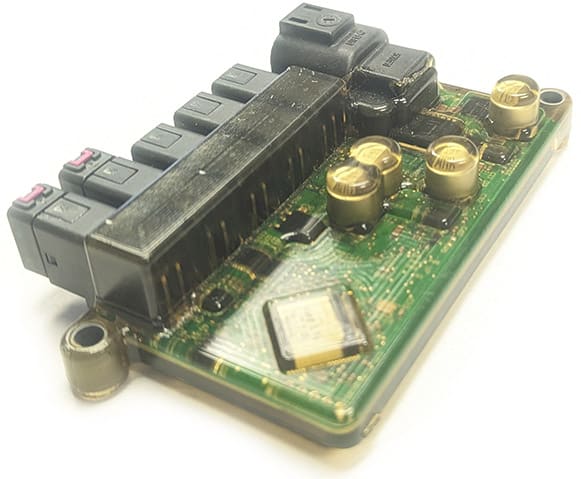
- Electrical Connectors: Overmolding can encapsulate electrical connectors, providing protection against moisture, dust, and vibration, which are common issues in engine compartments and other harsh automotive environments. This prevents corrosion and ensures reliable electrical connections.
Medical Devices
In the medical field, where patient safety and device reliability are non-negotiable, overmolding offers critical advantages. The process can enhance the grip, seal, and biocompatibility of critical instruments and devices.
Medical Device Overmolding Scenarios
- Surgical Instruments: Handles of surgical instruments can be overmolded with medical-grade TPEs to provide a sterile, ergonomic, and non-slip grip for surgeons, enhancing precision and reducing the risk of accidental drops.
- Drug Delivery Devices: Components of insulin pens or inhalers may be overmolded to ensure precise dosage delivery, provide a comfortable user experience, and protect sensitive mechanisms from contamination.
- Diagnostic Equipment: Overmolding can be used to create sealed enclosures for sensitive electronic components within diagnostic equipment, protecting them from harsh cleaning agents and environmental factors, thus extending their operational life.
Design Considerations for Optimal Durability

Achieving maximum durability through overmolding is not simply a matter of applying a second layer. It requires careful consideration of design principles to ensure the intended enhancements are realized and potential failure points are mitigated.
Material Selection Synergy
The successful union of substrate and overmolding material is not an afterthought; it’s a foundational element for durability.
- Adhesion Profiles: Understanding the specific adhesion properties of each material combination is crucial. Some materials bond well through simple co-molding, while others may require surface treatments or specific processing parameters to achieve a robust bond.
- Differential Expansion and Contraction: In applications with significant temperature fluctuations, you must consider how the substrate and overmolding material will expand and contract at different rates. Mismatched thermal expansion can lead to stress, warpage, and eventual delamination. Careful material selection can minimize this risk.
Geometric Design for Structural Integrity
The physical form of the interaction between the two materials is a direct contributor to the product’s resilience.
- Radiused Transitions: Sharp corners at the interface where the overmolding meets the substrate can act as stress concentration points. Employing generous radii and smooth transitions helps to distribute stress more evenly, preventing premature failure. You can think of this as avoiding sharp bends in a wire, which can weaken it over time.
- Overlapping Features: Designing the overmolding to slightly overlap the substrate in critical areas provides an added layer of mechanical keying and protection. This overlap acts as a guard against direct impact or abrasion to the substrate’s edge.
- Wall Thickness Optimization: The thickness of both the substrate and the overmolding layer must be carefully engineered. Insufficient wall thickness in either can compromise structural integrity, while excessive thickness can lead to increased material costs and cycle times without proportional benefits in durability.
Overmolding is a crucial process in the production of durable and efficient battery packs, enhancing their performance and longevity. For those interested in learning more about the intricacies of battery pack assembly, a related article can provide valuable insights into the techniques and materials used in this innovative manufacturing method. You can explore the details further in this informative piece on battery pack assembly.
The Overmolding Process: A Closer Look
| Metric | Description | Typical Values | Unit |
|---|---|---|---|
| Material Compatibility | Compatibility between substrate and overmold materials | Thermoplastics with thermoplastics, thermoplastics with elastomers | N/A |
| Adhesion Strength | Bond strength between substrate and overmold | 5 – 20 | MPa |
| Cycle Time | Time required to complete one overmolding cycle | 30 – 120 | Seconds |
| Overmold Thickness | Thickness of the overmold layer | 0.5 – 5 | mm |
| Temperature Range | Processing temperature for overmolding | 180 – 280 | °C |
| Shrinkage Rate | Dimensional shrinkage of overmold material after cooling | 0.5 – 2.5 | % |
| Hardness (Shore) | Hardness of the overmold material | 20 – 90 | Shore A/D |
| Injection Pressure | Pressure applied during injection molding | 500 – 1500 | bar |
Understanding the manufacturing process behind overmolding provides insight into how durability is achieved at a fundamental level. It’s a dance of heat, pressure, and precisely controlled material flow.
Two-Shot Injection Molding
The most common method for overmolding is two-shot injection molding. This technique allows for the sequential injection of two different materials into the same mold cavity, in two separate cycles, without manual intervention.
- First Shot: The substrate material is injected into the mold cavity and allowed to cool and solidify to a sufficient degree.
- Second Shot: The mold then rotates or indexes, presenting a second cavity or a reshaped cavity, and the overmolding material is injected directly onto the solidified first shot. This process ensures precise alignment and strong adhesion.
Insert Molding vs. Overmolding
While often used interchangeably, it’s important to distinguish overmolding from insert molding.
- Insert Molding: In insert molding, a pre-fabricated part (the insert) is placed into a mold cavity, and then molten plastic is injected around it. The insert is not typically melted or chemically bonded in the same way as a substrate in overmolding.
- Overmolding: Overmolding, as discussed, involves molding a second material onto a part that has already undergone a prior molding process. The fusion is often a combination of chemical and mechanical bonding.
Specialized Molding Techniques
Beyond standard two-shot injection molding, other techniques can be employed for specific overmolding needs.
- Multi-Shot Molding: For applications requiring more than two materials, multi-shot molding (also known as three-shot or even four-shot molding) can be utilized. This allows for the integration of multiple materials with different properties in a single manufacturing cycle.
- Compression Overmolding: In some cases, particularly with thermoset materials or when dealing with delicate inserts, compression overmolding might be used. This involves placing the substrate into a mold and then applying heat and pressure to a pre-measured charge of molding material, which then flows and cures.
By strategically employing overmolding, manufacturers can imbue their products with a resilience that extends their usefulness, reduces waste, and ultimately provides you, the consumer, with more dependable and longer-lasting items. It’s a testament to how thoughtful design and advanced manufacturing can create products that not only perform well but endure.
Lets talk about your next project
FAQs
What is overmolding?
Overmolding is a manufacturing process where one material is molded over or around another material to create a single, integrated part. It is commonly used to combine different materials, such as soft and hard plastics, to enhance functionality, aesthetics, or ergonomics.
What materials are typically used in overmolding?
Common materials used in overmolding include various types of plastics like thermoplastics (e.g., polypropylene, ABS, and TPE) and sometimes rubber or silicone. The choice of materials depends on the desired properties of the final product, such as flexibility, grip, or durability.
What are the main benefits of overmolding?
Overmolding offers several benefits, including improved product durability, enhanced grip or comfort, better aesthetics, and the ability to combine multiple functions into a single part. It also allows for the integration of different materials without the need for adhesives or mechanical fasteners.
In which industries is overmolding commonly used?
Overmolding is widely used in industries such as automotive, medical devices, consumer electronics, and household products. It is particularly valuable for creating ergonomic grips, protective covers, and complex multi-material components.
What are the key considerations when designing for overmolding?
Key considerations include material compatibility, mold design, part geometry, and the sequence of molding operations. Proper design ensures strong bonding between materials, prevents defects, and optimizes the manufacturing process for cost and efficiency.