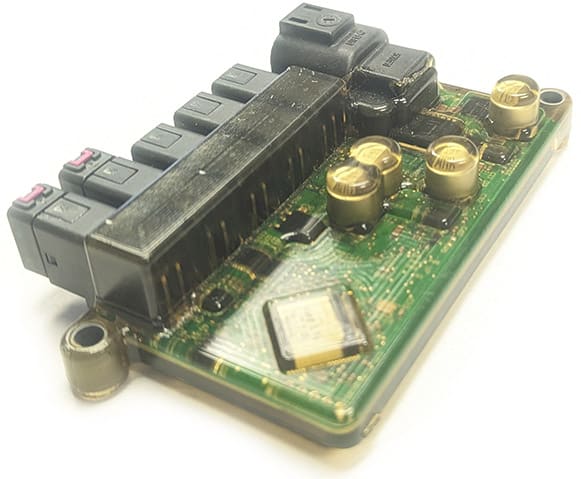

Electrically connecting components within a system is fundamental to its operation. While many connector types exist, a specific configuration, the potted backshell electrical connector, offers a unique set of advantages for certain applications. This configuration addresses challenges related to environmental protection, mechanical integrity, and signal reliability, particularly in environments where standard connectors might falter. Understanding how this design achieves these improvements is key to appreciating its utility.
At its core, a potted backshell electrical connector is an assembly designed to provide a robust and shielded interface between electrical cables and a mating connector. The term “potted” refers to the process of encapsulating a portion of the connector, typically the rear cavity where wires transition into the connector pins or sockets, with an insulating and protective material. This material, often a thermosetting resin, solidifies and forms a solid, integral unit. The “backshell” is the housing that surrounds this potted area, providing mechanical support and further environmental sealing.
Components of a Potted Backshell Assembly
To fully grasp the functionality, consider the individual elements that comprise this connector type.
Connector Housing
The primary connector housing, whether male (pins) or female (sockets), provides the interface for mating with its counterpart. This housing is typically made of a durable plastic or metal and contains the individual electrical contacts. The design of this housing is crucial for ensuring proper alignment and secure mating.
Potted Encapsulation
This is the defining feature. The wires from the cable are fed into a cavity at the rear of the connector. Before assembly, this cavity is filled with a liquid potting compound. Upon curing, this compound hardens, rigidly securing the wires and preventing any strain on the individual electrical connections. The potting material also serves to seal the cavity from moisture, dust, and other contaminants. This is akin to pouring concrete around sensitive electrical junctions for added protection.
Backshell
The backshell encloses the potted encapsulation and often provides a means for attaching to the cable armor or strain relief. It acts as a physical shield, further reinforcing the connection and ensuring that external forces do not compromise the internal wiring. Backshells can be straight, right-angled, or designed for specific cable entry angles. They are frequently designed to provide electromagnetic interference (EMI) and radio frequency interference (RFI) shielding.
Strain Relief Mechanism
Integral to many potted backshell designs is a strain relief mechanism. This component, often a clamp or grommet, secures the cable jacket just before it enters the backshell, preventing tensile forces on the cable from being transmitted to the individual conductors and their connections within the connector. This is vital for preventing premature failure.
The Potting Process: A Closer Look
The process of potting is central to the enhanced connectivity offered by these connectors. It’s not simply about filling a void; it’s a carefully controlled process.
Selection of Potting Compounds
The choice of potting compound is critical and depends heavily on the intended application. Common materials include epoxy resins, urethanes, and silicones. Each offers a different balance of properties such as flexibility, hardness, temperature resistance, chemical resistance, and electrical insulation capabilities. For applications demanding high temperature resistance, a specific class of epoxy might be chosen. For applications requiring flexibility to absorb vibration, a urethane might be preferred.
Encapsulation Techniques
Several methods can be employed for potting. In simpler applications, manual pouring might suffice. However, for consistent and reliable encapsulation, especially in high-volume manufacturing, automated dispensing systems are used. These systems precisely control the volume and placement of the potting compound, ensuring uniform coverage and absence of voids. Vacuum potting is also employed to remove trapped air bubbles that could compromise the integrity of the encapsulation.
Curing
Once applied, the potting compound undergoes a curing process. This can be achieved through heat, ambient temperature, or UV light curing, depending on the specific resin chemistry. The curing time and temperature are critical parameters that must be controlled to achieve the desired mechanical and electrical properties of the hardened encapsulation. Inadequate curing can lead to a weak bond or insufficient environmental sealing.
Enhancing Environmental Resistance
One of the primary drivers for using potted backshell electrical connectors is their superior resistance to harsh environmental conditions. Standard connectors, while suitable for benign environments, can be susceptible to degradation from exposure to moisture, dust, chemicals, and extreme temperatures.
Sealing Against Ingress
The potting compound, once cured, forms a solid barrier that effectively seals the wire entry point. This prevents the ingress of moisture, which can lead to corrosion of electrical contacts, short circuits, and eventual connector failure. Think of it as a hermetic seal around the vulnerable connections, preventing an unwelcome invasion.
Water and Moisture Ingress Protection
Many potted backshell connectors are designed to meet specific Ingress Protection (IP) ratings, such as IP67 or IP68. These ratings indicate the level of dust and water protection the connector assembly provides. For industrial machinery operating in wet conditions or marine environments, this level of protection is non-negotiable.
Dust and Particle Resistance
Beyond moisture, dust and fine particulate matter can also impede electrical connections and cause wear. The solid encapsulation prevents these particles from reaching the critical contact points. This is particularly important in manufacturing plants, mining operations, or any setting where airborne debris is prevalent.
Chemical and Solvent Resistance
In many industrial and automotive applications, connectors are exposed to a variety of chemicals, oils, and solvents. The potting compound can be selected to be resistant to these substances, preventing swelling, degradation, or chemical attack that would compromise the connector’s performance and lifespan. This ensures the connector can endure the chemical assault of its operating environment.
Extreme Temperature Performance
The properties of the potting compound can be tailored to withstand a wide range of operating temperatures. Some compounds can perform reliably at very low temperatures without becoming brittle, while others can endure high temperatures without melting or degrading. This broadens the operational envelope of the electrical connection.
Improving Mechanical Strength and Durability
The mechanical integrity of an electrical connection is as crucial as its electrical performance. Potted backshell connectors offer significant advantages in this regard, particularly in applications subjected to vibration, shock, or significant physical stress.
Preventing Wire Pull-Out
Without proper strain relief and encapsulation, the continuous movement and vibration inherent in many mechanical systems can lead to wires being pulled out of their terminals. The potted encapsulation rigidly secures the wires, preventing any movement that could stress the solder joints or crimps. This creates a solid anchor point, preventing the fragile connections from breaking free.
Vibration and Shock Resistance
The solid block of potting material dampens vibrations and dissipates shock forces that are applied to the cable. This greatly reduces the likelihood of fatigue failure in the wires or terminals. In scenarios involving heavy machinery or mobile platforms, this inherent resilience is a significant advantage.
Cable Bend and Flex Resistance
The strain relief mechanism, combined with the potting, prevents excessive bending or flexing of the wires at the point where they enter the connector. This protects the conductors from fatigue, which can lead to open circuits or intermittent connections over time. It acts as a hinge where the cable can bend without stressing the internal connections.
Halogenated Cable Support
In some hazardous environments, it may be necessary to support halogenated cables, which can release corrosive gases when exposed to high temperatures or fire. Specialized backshells and potting compounds are available that can accommodate these types of cables while maintaining the integrity of the connection.
Ensuring Signal Integrity and Reliability
Beyond physical robustness, potted backshell connectors are instrumental in maintaining the purity of electrical signals, especially in signal-intensive applications or electromagnetically noisy environments.
Shielding Against EMI/RFI
Many potted backshell designs incorporate conductive backshells and grounding features that effectively attenuate electromagnetic interference (EMI) and radio frequency interference (RFI). This is achieved by creating a Faraday cage around the connector and cable, preventing external noise from coupling onto the signal wires and protecting the signals from being radiated outwards. This acts like a shield, deflecting the unwanted electromagnetic static.
Signal Integrity in Noisy Environments
In applications such as high-speed data transmission, medical equipment, or aerospace systems, maintaining signal integrity is paramount. EMI/RFI shielding helps to ensure that data is transmitted accurately and without corruption. This is crucial for the reliable operation of sensitive electronic devices.
Reduced Crosstalk
The shielding provided by the backshell can also help to reduce crosstalk between adjacent conductors within the cable. This is particularly important for multi-conductor cables where signals can interfere with each other.
Electrical Insulation Properties
The potting compound itself provides excellent electrical insulation. This prevents short circuits between conductors and ensures that the intended electrical path is maintained. The dielectric strength of the potting material is a key factor in its ability to prevent arcing or breakdown.
Preventing Short Circuits
If the insulation on individual wires becomes damaged, the potting compound acts as a barrier, preventing conductors from coming into contact and causing a short circuit. This adds a layer of protection against catastrophic failure.
Hermetic Sealing for Critical Applications
In applications where absolute sealing is required, such as in medical implantable devices or high-vacuum systems, hermetically sealed connectors are necessary. While not all potted backshell connectors are hermetic, the potting process can be integral to achieving this level of sealing when combined with appropriate connector designs.
Applications and Use Cases
| Parameter | Specification | Unit | Typical Value | Notes |
|---|---|---|---|---|
| Operating Temperature Range | -55 to +125 | °C | -55 to +125 | Standard industrial grade |
| Ingress Protection Rating | IP67 | Rating | IP67 | Dust tight and water immersion protection |
| Voltage Rating | Up to 600 | Volts (V) | Up to 600 | Depends on connector size and type |
| Current Rating | 5 to 20 | Amperes (A) | Varies by contact size | Typical range for signal and power contacts |
| Material | Aluminum Alloy / Plastic | – | – | Backshell housing and potting compound |
| Potting Compound Type | Epoxy / Silicone | – | – | Provides environmental sealing and strain relief |
| Weight | 10 to 50 | grams | Varies by size | Lightweight for aerospace and military use |
| Connector Shell Size | 10 to 24 | Standard size | Varies | Common MIL-DTL-38999 sizes |
| Contact Resistance | <5 | mΩ (milliohms) | <5 | Low resistance for signal integrity |
| Durability (Mating Cycles) | 500+ | Cycles | 500+ | Typical for military connectors |
The unique combination of environmental protection, mechanical strength, and signal integrity makes potted backshell electrical connectors suitable for a wide array of demanding applications across various industries.
Aerospace and Defense
In these sectors, connectors are subjected to extreme temperatures, vibration, and exposure to fuels and hydraulic fluids. The reliability and durability of potted backshell connectors make them essential for critical systems such as flight control systems, communication equipment, and weapon systems. The consequence of failure in these environments can be severe, making robust connectors imperative.
Military Ground Vehicles
These vehicles operate in harsh, dusty, and often wet environments. Potted backshell connectors are used in critical systems like engine control units, navigation systems, and communication radios to ensure reliable operation under combat conditions.
Aircraft Avionics
The constant vibration, wide temperature fluctuations, and exposure to atmospheric conditions make these connectors vital for the safe and effective operation of aircraft systems.
Industrial Automation and Manufacturing
Manufacturing facilities often present challenging operational conditions, including dust, oil mist, exposure to cleaning solvents, and significant vibration from machinery.
Robotics
Robotic arms and mobile robots operate in dynamic environments where cable flexing and environmental exposure are constant. Potted backshell connectors protect the integral wiring of these machines.
Heavy Machinery
Connectors used in excavators, cranes, and other heavy machinery must withstand significant vibration, shock, and exposure to the elements.
Automotive and Transportation
The automotive industry relies on connectors that can endure vibration from engines and road surfaces, as well as exposure to road salt, water, and a wide range of chemicals.
Engine Control Units (ECUs)
These critical components are often located in areas exposed to engine heat and vibration, necessitating robust connector solutions.
Electric Vehicle (EV) Charging Systems
As EV technology advances, the charging infrastructure and onboard systems require connectors that can reliably handle high currents and environmental exposure.
Medical Equipment
The stringent requirements for hygiene, sterilization, and reliability in medical devices make potted backshell connectors valuable. Their resistance to cleaning chemicals and their ability to prevent ingress of biological contaminants are critical.
Diagnostic Imaging Equipment
These complex machines require consistent signal transmission and durability in environments that may involve frequent cleaning and operation.
Patient Monitoring Systems
Reliable and uninterrupted signal transmission is vital for patient safety. The durability and sealing of these connectors ensure continuous monitoring.
Energy Sector
From oil and gas exploration to renewable energy installations, connectors in the energy sector often face extreme environmental challenges and the need for long-term reliability.
Oil and Gas Exploration Equipment
Offshore drilling platforms and downhole tools are exposed to high pressures, corrosive environments, and extreme temperatures.
Wind Turbines
The constant movement, exposure to weather, and need for long-term operation in remote locations highlight the suitability of these connectors.
In conclusion, the potted backshell electrical connector is a testament to engineering solutions designed to overcome environmental and mechanical challenges. By encapsulating vulnerable connections, it creates a resilient and reliable interface, ensuring that electrical systems perform as intended, even in the most demanding scenarios. Its ability to seal out the elements, withstand physical abuse, and maintain signal purity solidifies its place as a critical component in modern technological systems.