”’Custom Gaskets”’ are components designed to create a seal between two surfaces, preventing leakage of liquids or gases. Unlike off-the-shelf, standard gaskets, custom gaskets are manufactured to precise specifications, often tailored to a unique application or environment. This tailored approach is often critical for optimizing system performance and ensuring operational longevity.
The effectiveness of a seal assembly is directly tied to the gasket’s material, dimensions, and manufacturing process. When these factors are meticulously aligned with the demands of a specific application, the result is improved efficiency, reduced maintenance, and enhanced safety.
== Understanding the Importance of Custom Gaskets ==
The role of a gasket extends beyond simply filling a gap. It acts as a critical interface, preventing the escape of process media and the ingress of contaminants. In many industrial and commercial settings, standard gaskets, while readily available, often represent a compromise. Their generic design may not fully accommodate specific pressures, temperatures, chemical exposures, or physical stresses. This can lead to inefficient operation, premature wear, and ultimately, system failure.
Custom gaskets address these limitations by providing a solution specifically engineered for the application. This specificity allows for the selection of the optimal material, precise dimensional control, and incorporation of features that enhance sealing integrity and operational lifespan.
=== Limitations of Standard Gaskets ===
Standard gaskets are manufactured in common sizes and materials to serve a broad range of general applications. While cost-effective for these general uses, their limitations become apparent in more demanding environments.
- Material Mismatch: A standard gasket may be made from a material that degrades under the specific chemical exposure or extreme temperatures of a unique application. For instance, a common rubber gasket may dissolve when exposed to certain solvents, rendering it ineffective.
- Dimensional Inaccuracy: Off-the-shelf gaskets may have tolerances that, while acceptable for many uses, are insufficient for applications requiring highly precise sealing. This can lead to inadequate compression or uneven pressure distribution across the sealing surface.
- Design Constraints: Standard gaskets typically feature basic shapes like rings or squares. Complex sealing configurations, such as those requiring multiple孔洞, non-uniform thicknesses, or integrated features, are rarely available as standard components.
- Reduced Lifespan: When a standard gasket is used in an application for which it is not optimally suited, its operational life is often significantly shortened. This results in increased downtime for replacement and higher maintenance costs.
=== Advantages of Tailored Solutions ===
The shift from standard to custom gaskets is often driven by a need for improved performance and reliability. Custom solutions offer several distinct advantages that contribute to maximizing operational efficiency.
- Optimal Material Selection: Custom manufacturing allows for the selection of gasket materials that precisely match the operational environment. This includes resistance to specific chemicals, temperature extremes, pressure variations, and abrasive forces. For example, a gasket for a food processing application might require FDA-approved silicone, while a high-temperature industrial oven might necessitate graphite or mica-based materials.
- Precision Fit and Form: Custom gaskets are designed to the exact dimensions of the mating surfaces. This ensures a perfect fit, preventing extrusion, blow-out, and uneven compression. The manufacturing process can account for intricate shapes, cutouts, and hole patterns, simplifying assembly and improving overall sealing effectiveness.
- Enhanced Performance Characteristics: Beyond basic sealing, custom gaskets can be engineered to possess specific performance attributes. This might include vibration dampening, electrical insulation, thermal conductivity or insulation, or electromagnetic interference (EMI) shielding.
- Extended Operational Life: By addressing all critical application parameters, custom gaskets often boast a significantly longer operational lifespan compared to their standard counterparts. This reduces the frequency of replacements, minimizes downtime, and lowers long-term maintenance expenditures.
== Designing for Optimal Efficiency ==
The design phase is paramount in the creation of an effective custom gasket. It involves a collaborative effort between the end-user and the gasket manufacturer to ensure all critical parameters are identified and addressed.
=== Key Design Considerations ===
Several factors must be thoroughly analyzed during the design process to ensure the custom gasket meets its intended performance objectives.
- Application Environment: This encompasses the operating temperature range, pressure fluctuations, exposure to specific chemicals (acids, bases, solvents, oils), presence of abrasive particles, and humidity levels. A gasket operating in a cryogenic environment will require vastly different material properties than one in a high-temperature steam system.
- Material Compatibility: The selected gasket material must not only withstand the application environment but also be compatible with the mating flange materials. Galvanic corrosion can occur if dissimilar metals are in contact with certain gasket materials.
- Flange Design and Surface Finish: The geometry of the flanges, their rigidity, and the surface finish of the sealing faces all influence gasket performance. A rough flange surface may require a softer gasket material to conform, while a smooth surface can utilize a firmer material.
- Compression Load and Bolt Torque: Understanding the available compression load and the required bolt torque is crucial for determining the gasket’s thickness and hardness. Too much compression can damage the gasket, while too little will result in a leak.
- Dynamic vs. Static Sealing: Gaskets are classified as either static or dynamic. Static gaskets seal between two stationary surfaces, often subject only to temperature and pressure changes. Dynamic gaskets, however, seal between surfaces that move relative to each other, such as in piston rods or valve stems. This distinction significantly impacts material selection and design.
=== Material Selection and Characteristics ===
The choice of gasket material is a cornerstone of custom gasket design. Each material possesses a unique combination of properties that make it suitable for specific applications.
- Elastomers (Rubbers): These include Natural Rubber, Neoprene, Nitrile (Buna-N), EPDM, Silicone, and Viton (Fluoroelastomer). They offer flexibility, good sealing under moderate compression, and varying degrees of chemical and temperature resistance.
- Natural Rubber: Good abrasion resistance, but poor oil and chemical resistance.
- Neoprene: Moderate oil and chemical resistance, good weatherability.
- Nitrile (Buna-N): Excellent oil and fuel resistance.
- EPDM: Excellent ozone, weather, and steam resistance; poor oil resistance.
- Silicone: Wide temperature range, good flexibility, but poor abrasion and tear resistance.
- Viton: Excellent chemical, high-temperature, and oil resistance.
- Non-Asbestos Fibers (NAF): Composed of various inorganic and organic fibers bound with rubber or other polymeric binders. These materials are often used as alternatives to asbestos for general industrial applications, offering good chemical resistance and temperature stability.
- Compressed Non-Asbestos Fiber (CNAF): General-purpose, cost-effective, suitable for many industrial fluids.
- Cork: Good conformability, often used for sealing irregular surfaces or where low bolt loads are available. Can be combined with rubber for enhanced properties (cork-rubber).
- Graphite: Excellent high-temperature resistance, chemical inertness, and good conformability. Available in flexible sheets or as part of spiral-wound gaskets.
- PTFE (Polytetrafluoroethylene): Chemical inertness, wide temperature range, and low coefficient of friction. Often used in chemically aggressive environments or where non-contamination is critical.
- Felt: Good conformability and vibration dampening. Often used for dust and oil seals in non-pressure applications.
- Metals: Used in metallic and semi-metallic gaskets (e.g., spiral wound, corrugated). Offer high strength, resistance to extreme pressures and temperatures, and are often combined with softer fillers.
== Manufacturing Processes and Precision ==
The precision of the manufacturing process directly impacts the quality and performance of a custom gasket. Modern manufacturing techniques allow for highly accurate and intricate designs.
=== Cutting Technologies ===
Various cutting technologies are employed to produce custom gaskets, each with its own advantages depending on the material, thickness, and required tolerance.
- Die Cutting: A traditional method utilizing a custom-made die to stamp out the gasket shape. It is cost-effective for high-volume production of specific designs but less economical for low-volume or prototypal runs due to tooling costs.
- Accuracy: Generally good, but limited by die wear and material thickness.
- Speed: High production rates once the die is made.
- Waterjet Cutting: Uses a high-pressure stream of water, often mixed with an abrasive, to cut through materials. This method is highly versatile, capable of cutting almost any material (rubber, plastics, metals) with excellent precision and without creating a heat-affected zone.
- Accuracy: Very high, capable of intricate geometries.
- Material Versatility: Can cut thick and hard materials.
- No Heat Affected Zone (HAZ): Preserves material properties around the cut.
- Laser Cutting: Utilizes a focused laser beam to cut or engrave materials. Excellent for intricate designs and producing clean, precise edges on various materials, particularly thinner plastics and non-metallic materials.
- Accuracy: Extremely high, ideal for complex geometries.
- Speed: Fast for many materials.
- Limitations: Some materials (e.g., certain rubbers) can char or melt.
- Flash Cutting (Knife Cutting): A digital cutting method that uses a computer-controlled blade to cut materials. Ideal for prototyping, low-volume production, and intricate designs, as it eliminates tooling costs.
- Accuracy: High, good for precision curves and details.
- Flexibility: Easy to modify designs without retooling.
- Limitations: Slower than die cutting for high volumes.
=== Quality Control and Tolerances ===
Rigorous quality control is essential throughout the manufacturing process to ensure that each custom gasket adheres to the specified dimensions and material properties.
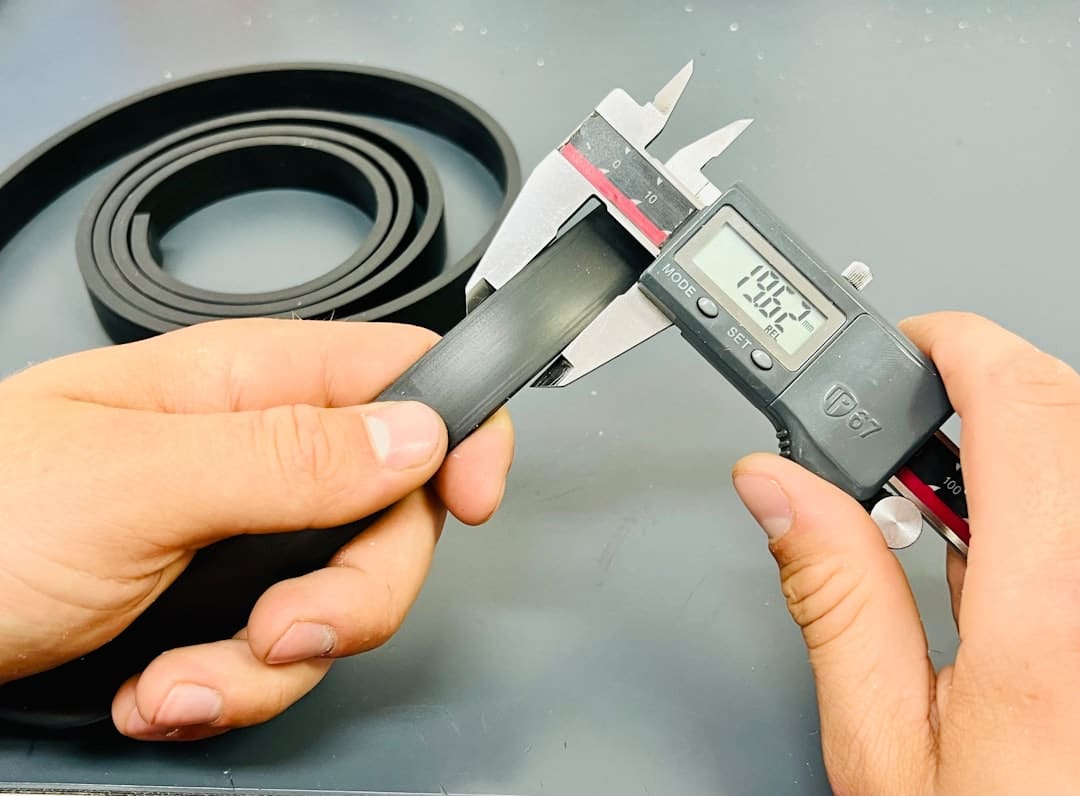
- Dimensional Inspection: Using calipers, micrometers, optical comparators, and even 3D scanning, gaskets are measured against the engineering drawings to verify accuracy.
- Material Verification: Incoming raw materials are inspected to confirm they meet specifications, and finished gaskets may undergo testing to verify material hardness (Durometer), tensile strength, and chemical resistance.
- Visual Inspection: Gaskets are visually inspected for defects such as burrs, tears, voids, and inconsistencies that could compromise sealing integrity.
- Statistical Process Control (SPC): Monitoring and controlling manufacturing processes to reduce variability and ensure consistent product quality.
- Industry Standards: Adherence to relevant industry standards (e.g., ASTM, API, FDA) is crucial for critical applications, ensuring performance and safety.
== Economic and Operational Benefits ==
Investing in custom gaskets, while potentially having a higher initial cost than standard alternatives, often yields significant long-term economic and operational benefits. Think of a custom gasket as an insurance policy against costly failures.
=== Reduced Downtime and Maintenance Costs ===
Premature gasket failure in critical equipment leads to unplanned downtime, which translates directly into lost production and revenue. Custom gaskets are designed for longevity and reliability.
- Extended Service Life: By using the correct material and precise dimensions, custom gaskets last longer, requiring less frequent replacement. This is a direct reduction in material and labor costs associated with maintenance.
- Prevention of Leaks and Contamination: A perfectly sealed system prevents valuable process media from escaping and safeguards against contaminants entering the system. This reduces material loss, environmental clean-up costs, and product spoilage.
- Predictable Performance: Custom gaskets provide a higher degree of predictable performance, allowing for more accurate scheduling of preventative maintenance and reducing the likelihood of unexpected failures.
=== Optimized System Performance ===
Beyond preventing leaks, custom gaskets can actively contribute to the efficiency and performance of an entire system.
- Energy Efficiency: A well-sealed system prevents the loss of heated or cooled fluids and gases, such as steam or refrigerants. This directly reduces energy consumption. For example, a custom gasket in a steam line designed to withstand specific temperatures and pressures will prevent steam leaks that would otherwise lead to energy waste.
- Improved Process Control: Consistent sealing performance allows for better control over internal system pressures and temperatures, which can be critical for maintaining optimal process conditions in manufacturing or chemical processing.
- Enhanced Safety: In systems handling hazardous chemicals, high pressures, or extreme temperatures, a reliable seal is critical for personnel safety and environmental protection. Custom gaskets are engineered to mitigate these risks.
- Reduced Vibration and Noise: In some applications, custom gaskets can be designed with dampening properties to reduce vibration and associated noise, contributing to a more stable and ergonomic operating environment.
== Case Studies and Real-World Applications ==
The value of custom gaskets becomes particularly evident in diverse industrial and commercial applications where generic solutions fall short.
=== High-Temperature and High-Pressure Applications ===
Environments characterized by extreme temperatures and pressures demand gaskets that can maintain their integrity under duress.
- Power Generation: In steam turbines and boiler systems, gaskets made from advanced graphite, mica, or specialized metallic alloys are custom-designed to withstand temperatures exceeding 500°C and pressures far above typical atmospheric conditions. A standard rubber gasket would disintegrate almost instantly.
- Oil and Gas Industry: Custom gaskets are essential in pipelines, refineries, and drilling equipment, where they must resist corrosive hydrocarbons, high pressures, and wide temperature swings. Specialty elastomers like Viton or HNBR, and robust metallic gaskets, are often used.
- Chemical Processing: Reactors and piping systems handling aggressive chemicals at elevated temperatures often require PTFE, compressed non-asbestos fiber gaskets with chemical-resistant binders, or exotic alloy gaskets to prevent highly corrosive leaks.
=== Chemical and Food Processing Industries ===
These industries have unique requirements related to chemical resistance, hygiene, and regulatory compliance.
- Food and Beverage Manufacturing: Gaskets here must be FDA-compliant, non-toxic, and resistant to CIP (Clean-In-Place) and SIP (Sterilize-In-Place) cleaning solutions. Silicone, EPDM, and specialized food-grade PTFE are commonly custom-cut to fit unique sanitary fittings and processing equipment. Preventing bacterial traps through precise fitting is critical.
- Pharmaceutical Production: Similar to food processing, strict hygiene and material compatibility are paramount. Custom gaskets ensure sterile environments and prevent contamination of sensitive drug formulations. Materials often include USP Class VI approved silicones and highly pure PTFE.
- Semiconductor Manufacturing: In this industry, ultra-high purity and absence of particulate matter are critical. Custom-made PTFE and perfluoroelastomer (FFKM) gaskets are designed to seal vacuum chambers and gas lines, ensuring zero contamination.
=== Specialty and Niche Applications ===
Beyond heavy industry, custom gaskets find their place in a myriad of specialized applications where off-the-shelf options are inadequate.
- Aerospace: Lightweight, high-performance gaskets are custom-fabricated from materials like silicone, fluorosilicone, or high-performance composites to seal against fuel, hydraulic fluids, and extreme atmospheric conditions in aircraft and spacecraft. Weight and reliability are primary concerns.
- Medical Devices: Small, intricate custom gaskets made from biocompatible silicone or other specialized elastomers are used in everything from surgical instruments to diagnostic equipment, ensuring leak-free operation and patient safety.
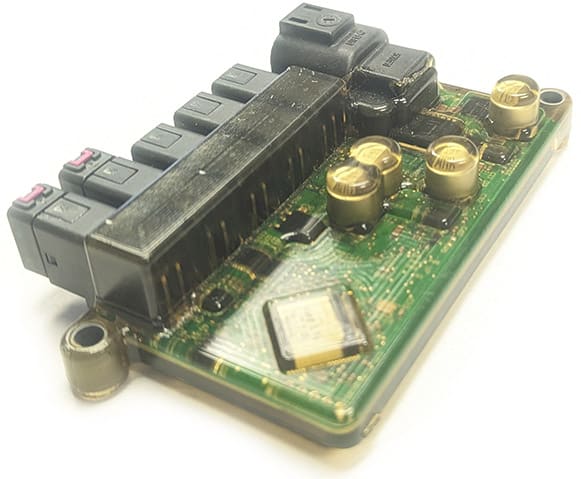
- Electronics and EMI Shielding: Custom gaskets can be designed to provide both an environmental seal and electromagnetic interference (EMI) shielding, made from conductive silicones or gasketing materials impregnated with metallic particles. This protects sensitive electronics from interference and moisture.
- Architectural and Construction: Custom weather stripping and acoustic seals for specialized doors, windows, and building envelopes are designed to specific profiles and environmental conditions, ensuring optimal insulation and noise reduction.
In conclusion, custom gaskets are not merely commodity components; they are engineered solutions that play a fundamental role in optimizing the efficiency, safety, and longevity of systems across a vast array of industries. By meticulously aligning material properties, dimensions, and manufacturing precision with the exact demands of an application, custom gaskets transcend the limitations of standard alternatives, offering a superior return on investment through reduced downtime, lower maintenance costs, and enhanced operational performance. Their adoption signifies a strategic approach to engineering that prioritizes reliability and bespoke suitability over generic compromise.