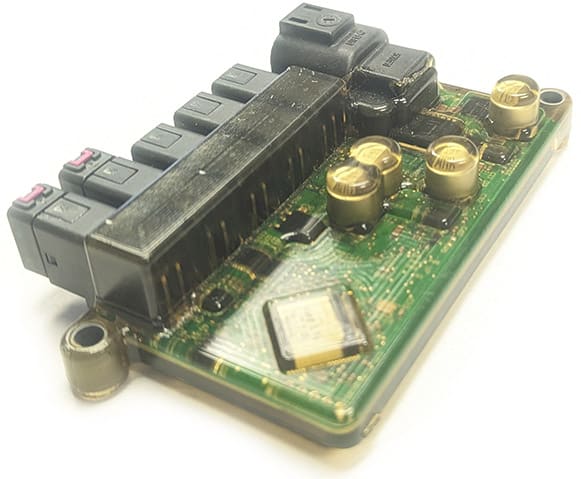

This article discusses custom molded Fluoroelastomer (FKM) materials, detailing their properties, manufacturing processes, and applications.
Fluoroelastomers are a class of synthetic elastomers that achieve their unique properties through the incorporation of fluorine atoms into their polymer chains. This fluorine content is the bedrock upon which their high performance is built, acting as a shield against aggressive environments. The presence of strong carbon-fluorine bonds is central to their resilience. These bonds are significantly more stable than the carbon-hydrogen bonds found in many other common elastomers, making FKM materials inherently resistant to chemical attack and thermal degradation.
The Chemistry of Resilience: Fluorine’s Role
The strategic placement of fluorine atoms dictates the specific performance characteristics of different FKM grades. The degree of fluorination, along with the presence of specific monomer units, can be tailored to optimize resistance to particular chemicals, temperature ranges, and mechanical stresses. For instance, higher fluorine content generally correlates with improved resistance to fuels and oils, while the inclusion of specific comonomers can enhance low-temperature flexibility or steam resistance. This chemical versatility allows for the creation of FKM materials designed for precise applications, rather than a one-size-fits-all approach.
Types of FKM: A Spectrum of Performance
Fluoroelastomers are not a monolithic entity; rather, they exist as a family of materials with varying compositions and, consequently, differing performance profiles. The primary classifications often revolve around their fluorine content and the type of cure system employed.
High Fluorine Content Grades
These FKM types, typically containing 65% or more fluorine by weight, offer exceptional resistance to aggressive chemicals, including concentrated acids, fuels, and oils. Their robust molecular structure makes them a prime choice for demanding environments where other elastomers would quickly degrade. This makes them akin to a knight in shining armor, capable of withstanding relentless assaults.
Medium Fluorine Content Grades
With fluorine content generally falling between 60% and 65%, these grades strike a balance between chemical resistance and improved low-temperature flexibility. They provide a valuable middle ground for applications that require good chemical compatibility without necessitating the extreme resistance of high-fluorine variants, offering a more adaptable solution.
Specialty Grades
Beyond these broad categories, FKM materials are further refined through the incorporation of specific comonomers. These specialty grades can be engineered for enhanced resistance to steam, alcohols, or to exhibit improved low-temperature performance or ozone resistance. This fine-tuning allows for a bespoke approach to material selection, ensuring the optimal blend of properties for a given application.
The Advantages of Custom Molding FKM
Custom molding is the process by which FKM materials are shaped into specific components through the application of heat and pressure. This method allows for the creation of complex geometries and precise tolerances, ensuring that the final part precisely fits its intended function. The inherent properties of FKM, combined with the precision of custom molding, create a potent synergy for demanding applications.
Precision and Design Freedom: Shaping Possibilities
The hallmark of custom molding is its ability to translate intricate designs into tangible parts. Unlike general-purpose molding, custom processes are designed to accommodate unique shapes and features, allowing engineers to push the boundaries of component design. This is not merely about creating a shape; it is about engineering a functional component that integrates seamlessly into a larger system. You are not simply pouring material into a mold; you are sculpting a solution.
Material Optimization and Performance Enhancement
Custom molding allows for the precise selection and processing of FKM compounds to maximize their inherent strengths. The curing process, in particular, can be meticulously controlled to achieve optimal cross-linking, which directly impacts the material’s ultimate mechanical properties, such as tensile strength, elongation, and compression set. This level of control ensures that the material performs at its peak potential.
Cost-Effectiveness for Specialized Needs
While initial tooling costs for custom molding can be a consideration, for specialized, high-performance applications, it often proves to be more cost-effective in the long run. By producing components with precisely the required properties and minimizing waste, custom molding avoids the over-engineering and potential premature failure associated with using less suitable, off-the-shelf materials. It is an investment in longevity and reliable performance.
The Custom Molding Process for FKM
The journey from raw FKM material to a finished custom-molded component involves a series of carefully controlled steps. Each stage plays a critical role in ensuring the quality and performance of the final product.
Material Selection and Compounding
The first step involves selecting the appropriate FKM grade based on the application’s environmental conditions and performance requirements. This is followed by compounding, where the base FKM polymer is mixed with various additives. These additives are not mere fillers; they are essential ingredients that fine-tune properties.
Fillers: Modifying Mechanical Properties
Fillers, such as carbon black or mineral fillers, are incorporated to enhance mechanical properties like tensile strength, tear resistance, and abrasion resistance. The type and loading of the filler are critical variables. For instance, certain grades of carbon black can significantly improve the wear characteristics of the FKM.
Curing Agents: The Backbone of Elasticity
Curing agents, such as peroxides or bisphenols, are essential for cross-linking the polymer chains, transforming the raw elastomer into a resilient, elastic material. The choice of curing system influences the cure rate, the properties of the cross-links, and the overall thermal and chemical resistance of the vulcanizate.
Other Additives: Tailoring Specific Performance
Other additives may include processing aids to improve mold flow, antioxidants to enhance thermal aging resistance, and pigments for coloration. Each additive is a carefully chosen brushstroke on the canvas of the FKM material, adding a specific hue or texture to the final composition.
Mold Design and Tooling
The design of the mold is paramount. It must accurately reflect the desired geometry of the final part, accounting for shrinkage during the curing process and flash removal. High-precision tooling is often required for complex parts and tight tolerances.
Cavity Design: The Blueprint of the Part
The shape and dimensions of the mold cavity directly determine the final part’s geometry. Careful consideration must be given to draft angles for easy part ejection and to the placement of gates and vents for efficient material flow and air release.
Runner and Gating Systems: Guiding the Flow
The runner system directs the molten FKM from the injection point to the mold cavities, while the gates are the points where the material enters the cavity. Proper runner and gate design is crucial for uniform filling, preventing defects, and minimizing material waste.
Molding Techniques: From Heat to Shape
Several molding techniques can be employed for FKM, with compression molding and injection molding being the most common for custom-molded parts.
Compression Molding: Simple and Effective
In compression molding, a pre-measured quantity of FKM compound is placed into the heated mold cavity. The mold is then closed under pressure, forcing the material to fill the cavity and cure. This method is often favored for larger parts or those with simpler geometries.
Injection Molding: Precision and Speed
Injection molding involves injecting molten FKM compound into a closed mold cavity under high pressure. This process is highly automated and can produce complex parts with excellent dimensional accuracy and at high production rates. It offers greater control over filling and packing, leading to superior part quality.
Post-Curing and Finishing
Once molded, many FKM parts undergo a post-curing process, typically in an oven at elevated temperatures. This further cross-links the material, improving its mechanical properties and dimensional stability by driving out any residual volatiles. Finishing operations may include trimming of flash or other minor adjustments.
Applications of Custom Molded FKM
The unique combination of properties offered by custom molded FKM makes it indispensable in a wide array of demanding industries. It serves as a silent guardian in environments where other materials falter.
Automotive Industry: Engine Sealing and Fuel Systems
In the automotive sector, FKM’s resistance to fuels, oils, and high temperatures makes it ideal for O-rings, seals, and gaskets in engine compartments, fuel lines, and transmission systems. Its ability to withstand aggressive automotive fluids without swelling or degrading ensures leak-free operation and extends component lifespan.
Fuel Injector Seals: Precise Fuel Delivery
Custom molded FKM seals are critical for fuel injector systems, ensuring precise fuel delivery and preventing leaks under high pressure and temperature conditions.
Crankshaft and Camshaft Seals: Preventing Contamination
These seals prevent oil and other contaminants from entering critical engine components. FKM’s resilience to oils and heat makes it a reliable choice for these demanding applications.
Aerospace Industry: Extreme Environments and Reliability
The aerospace industry demands materials that can withstand extreme temperature fluctuations, exposure to hydraulic fluids, and high altitudes. Custom molded FKM components, such as seals, diaphragms, and O-rings, are vital for maintaining the integrity and safety of aircraft systems.
Hydraulic System Seals: Maintaining Pressure and Functionality
FKM’s resistance to hydraulic fluids and its ability to maintain seal integrity under varying pressures are crucial for the reliable operation of aircraft hydraulic systems.
O-rings in Fuel Systems: Preventing Leakage in Critical Applications
In aviation fuel systems, the integrity of seals is paramount. FKM’s resistance to aviation fuels and its ability to maintain flexibility at low temperatures make it a preferred material.
Chemical Processing Industry: Aggressive Media Handling
In chemical plants, where exposure to corrosive chemicals and extreme temperatures is commonplace, custom molded FKM seals, gaskets, and diaphragms are essential for ensuring safe and efficient operation. Their chemical inertness protects against degradation and contamination.
Pump Seals: Containing Hazardous Fluids
FKM pump seals are used to contain aggressive chemicals, preventing leaks and environmental contamination. Their broad chemical resistance minimizes the risk of material incompatibility.
Valve Seals: Controlling Chemical Flow
These seals are critical for controlling the flow of various chemicals and prevent leakage in demanding industrial valves.
Oil and Gas Industry: Downhole and Surface Applications
The harsh conditions encountered in the oil and gas industry, including high pressures, high temperatures, and exposure to crude oil and drilling fluids, necessitate the use of high-performance elastomers. Custom molded FKM components are widely used for seals, O-rings, and packings in both downhole exploration equipment and surface facilities.
Blowout Preventer (BOP) Seals: Ensuring Safety in Critical Operations
FKM’s resilience and resistance to hydrocarbons make it a key material for seals in blowout preventers, critical safety devices in oil and gas extraction.
Packer Seals: Isolating Formations
These seals are used to isolate different geological formations during well completion and production. Their ability to withstand high pressures and aggressive downhole fluids is vital.
Semiconductor Manufacturing: Purity and Precision
The semiconductor industry demands extremely high levels of purity and precision. Custom molded FKM components, particularly in their high-purity grades, are used in wafer handling equipment, sealing applications in vacuum systems, and in the manufacturing processes themselves, where they must resist aggressive etching chemicals without outgassing or contaminating the sensitive semiconductor wafers.
Vacuum Seals: Maintaining Purity in Critical Environments
In the ultra-high vacuum environments of semiconductor fabrication, FKM seals are used to prevent leaks and maintain the required purity levels.
Wafer Carrier Seals: Protecting Delicate Components
These seals are used in wafer carriers to protect delicate semiconductor wafers during transport and processing, preventing damage and contamination.
The Future of Custom Molded FKM
<?xml encoding=”UTF-8″>
| Property | Typical Value | Unit | Description |
|---|---|---|---|
| Hardness (Shore A) | 70-90 | Shore A | Measure of material hardness |
| Tensile Strength | 8-12 | MPa | Resistance to breaking under tension |
| Elongation at Break | 150-300 | % | Material stretch before breaking |
| Compression Set | 15-30 | % | Permanent deformation after compression |
| Temperature Range | -20 to 250 | °C | Operating temperature limits |
| Chemical Resistance | Excellent | – | Resistance to oils, fuels, and chemicals |
| Specific Gravity | 1.8-2.0 | – | Density relative to water |
| Flammability | UL 94 V-0 | – | Flame retardant rating |
The evolution of custom molded FKM is not static; it is a continuous process of innovation driven by the ever-increasing demands of modern industries. As new challenges arise and existing technologies advance, so too will the capabilities and applications of FKM materials.
Advancements in Polymer Science
Research and development in polymer science are ongoing, leading to the creation of new FKM grades with enhanced properties. This includes improved low-temperature flexibility, greater resistance to specific aggressive media, and better performance under extreme dynamic conditions. The pursuit of higher performance is a constant driving force.
Innovations in Processing Technology
Advances in molding technologies, such as the development of more sophisticated multi-component molding or additive manufacturing techniques applied to rubber-like materials, may further expand the design possibilities for custom FKM parts. This opens doors to even more complex and integrated component designs.
Growing Demand for High-Performance Solutions
In critical sectors like renewable energy, advanced medical devices, and next-generation transportation, the need for reliable, high-performance sealing solutions is escalating. Custom molded FKM is well-positioned to meet these growing demands, offering the performance and durability required for these cutting-edge applications. The future of FKM is intrinsically linked to the future of innovation itself.