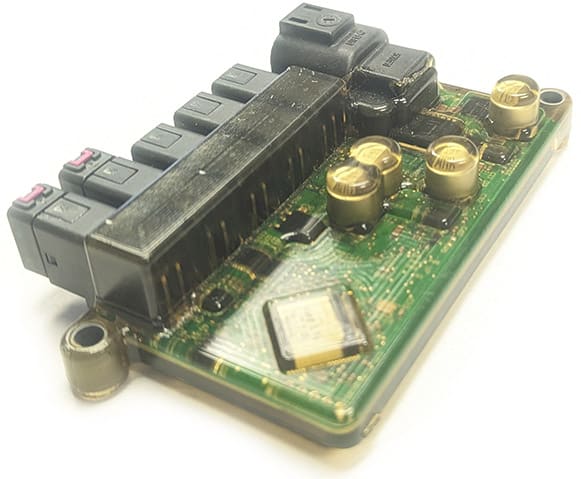

Maximizing Protection with PCB Potting
Printed circuit board (PCB) potting is a manufacturing process that involves encasing a populated PCB within a protective material, often a resin or polymer. This encapsulation serves a critical role in safeguarding sensitive electronic components from a variety of environmental and physical threats. Understanding the principles and applications of PCB potting allows for the enhancement of device reliability, longevity, and performance in challenging operational settings.
What is Potting?
PCB potting, at its core, is a form of conformal coating, albeit a more robust one. While conformal coating applies a thin, protective film, potting involves filling the entire volume around the PCB with a potting compound. This compound acts as a solid barrier, providing a level of protection far exceeding that of a simple coating. The potting material solidifies, creating a durable shell that encapsulates the entire assembly. This monolithic structure is less prone to delamination or damage compared to thin film applications.
The Potting Process
The process typically begins with preparing the PCB assembly, ensuring it is clean and free from contaminants. Masking is then applied to areas that should not be potted, such as connectors or test points. The potting compound, in a liquid state, is then introduced to the assembly, either through a pouring method or by using dispensers for more precise application. Vacuum degassing is often employed to remove trapped air bubbles, which can compromise the integrity of the potting and create voids. Once the compound is in place, it is cured, either through heat, UV light, or a chemical reaction, hardening into its protective form.
Types of Potting Compounds
The choice of potting compound is dictated by the specific environmental and operational requirements of the application. Each material possesses distinct properties that lend themselves to different use cases. Understanding these properties is key to selecting the most appropriate compound for maximizing protection.
Epoxy Resins
Epoxy resins are a widely used class of potting compounds due to their excellent mechanical strength, chemical resistance, and adhesive properties. They offer good thermal stability and electrical insulation. However, some epoxies can be brittle.
Properties of Epoxy Potting Compounds
- Adhesion: Epoxies bond strongly to a wide range of substrates, including PCB materials and component casings.
- Chemical Resistance: They are resistant to many solvents, acids, and alkalis, providing a shield against corrosive substances.
- Mechanical Strength: Epoxies offer good abrasion and impact resistance, protecting against physical damage.
- Electrical Insulation: They provide excellent dielectric properties, preventing short circuits and electrical leakage.
Silicone Elastomers
Silicone potting compounds are prized for their flexibility, excellent temperature range, and UV resistance. Their inherent elasticity allows them to absorb vibration and shock without cracking or stressing the components they encapsulate.
Advantages of Silicone Potting Compounds
- Flexibility: Silicone remains pliable over a wide temperature range, reducing stress on components during thermal cycling.
- Temperature Resistance: They can withstand extreme temperatures, both high and low, making them suitable for demanding environments.
- UV and Weather Resistance: Silicones are highly resistant to degradation from ultraviolet radiation and weathering, prolonging their lifespan outdoors.
- Biocompatibility (Certain Grades): Some silicone formulations are biocompatible, suitable for medical devices.
Polyurethanes
Polyurethane potting compounds offer a balance of flexibility, toughness, and abrasion resistance. They are often chosen for applications where a combination of these properties is required.
Characteristics of Polyurethane Potting Compounds
- Toughness: Polyurethanes are known for their durability and resistance to tearing and puncturing.
- Abrasion Resistance: They provide good protection against wear and tear from friction.
- Chemical Resistance: Offer good resistance to oils, fuels, and many solvents.
- Cost-Effectiveness: Can be a more economical choice compared to some other high-performance materials.
Urethane Acrylates
These compounds offer rapid cure times and good chemical resistance, making them suitable for high-volume production where speed is a factor.
Benefits of Urethane Acrylates
- Fast Curing: UV-curable urethane acrylates can cure in seconds, significantly speeding up manufacturing.
- Good Chemical Resistance: Offer protection against a range of chemicals.
- Low Viscosity (Often): Can be formulated for low viscosity, allowing for good penetration into tight spaces.
PCB potting is a crucial process in electronics manufacturing that enhances the durability and reliability of printed circuit boards. For those interested in learning more about the successful implementation of overmolding techniques, which can be closely related to potting, you can read an insightful article on a recent project completion at Overmold Express. This article highlights the benefits and applications of overmolding in protecting electronic components. For more information, visit this link.
Enhancing Environmental Protection
The operational environment is a primary driver for PCB potting. Exposure to moisture, dust, chemicals, and extreme temperatures can significantly shorten the lifespan of electronic devices. Potting acts as a formidable barrier against these elements, ensuring sustained performance.
Moisture and Humidity Resistance
Water and high humidity are insidious enemies of electronic components. Moisture ingress can lead to corrosion, short circuits, and outright failure. Potting forms a continuous, impermeable shield around the PCB, effectively preventing water from reaching the sensitive circuitry. This is akin to building a watertight hull for a ship navigating rough seas; the underlying vessel (the PCB) remains dry and functional despite external conditions.
Preventing Corrosion and Short Circuits
The solidification of potting compounds creates a hermetic seal, isolating the PCB from atmospheric moisture. This prevents the electrochemical reactions that lead to metallic corrosion on solder joints and component leads. Furthermore, the dielectric properties of the potting material prevent the formation of conductive pathways between components, thereby averting short circuits that can cause immediate and catastrophic failure.
Chemical and Solvent Resistance
Many industrial, automotive, and aerospace applications involve exposure to aggressive chemicals, oils, solvents, and fuels. These substances can degrade solder masks, plastic housings, and even the PCB substrate itself. A well-chosen potting compound will be chemically inert to the specific contaminants encountered, safeguarding the electronics like a protective suit shields a worker from hazardous materials.
Application in Harsh Industrial Environments
In manufacturing plants, chemical processing facilities, and laboratories, PCBs are often subjected to splashes, spills, and fumes. Potting provides a crucial layer of defense, ensuring that critical control systems and instrumentation remain operational even when exposed to these corrosive agents.
Dust and Debris Ingress Prevention
Fine dust and particulate matter can accumulate on PCBs, leading to increased leakage currents, overheating, and eventual component failure. Potting completely encloses the PCB, creating a smooth, dust-repellent surface that prevents ingress. This is similar to a cleanroom environment, where controlled conditions prevent contaminants from affecting sensitive processes.
Maintaining Cleanliness and Preventing Surface Leakage
By sealing the PCB, potting eliminates the nooks and crannies where dust and debris tend to settle. This maintains the integrity of the electrical insulation between components and traces, preventing parasitic currents and ensuring predictable performance.
Fortifying Against Physical Stress
Beyond environmental threats, PCBs are also susceptible to physical stresses such as vibration, shock, and impact. Potting provides a degree of mechanical reinforcement and damping that significantly enhances the resilience of the assembly.
Vibration Damping and Shock Absorption
Operation in vehicles, aircraft, or machinery often exposes PCBs to constant vibration and sudden shocks. Without protection, these forces can cause solder joint fatigue, component detachment, and even cracking of the PCB substrate. Potting compounds, particularly flexible ones like silicones and polyurethanes, act as shock absorbers, dissipating the energy of these forces before they can damage the assembly. Think of a well-padded case protecting fragile goods during transit; potting provides a similar cushioning effect.
Extending Component Lifespan under Dynamic Loads
The ability of potting to dampen vibrations and absorb shock translates directly into an extended operational lifespan for the individual components and the PCB as a whole. By reducing the stresses on solder joints, lead wires, and the PCB material itself, potting mitigates the risk of mechanical failure.
Mechanical Protection and Impact Resistance
In applications where the PCB might be subject to direct impact or abrasion, potting provides a robust protective shell. The hardened potting compound can absorb and distribute impact forces, preventing damage to delicate components and the PCB substrate. The strength and toughness of the chosen material determine the level of impact resistance.
Shielding Against Accidental Damage
Accidental drops, bumps, or impacts are a reality in many operational scenarios. Potting transforms a vulnerable PCB assembly into a more resilient unit, capable of withstanding a degree of physical abuse without compromising functionality. This is akin to adding armor to a tank; it significantly reduces its vulnerability.
Thermal Management Considerations
While potting primarily focuses on protection, its thermal properties are also a critical factor in system design. The potting compound can influence heat dissipation from the PCB.
Heat Dissipation and Thermal Conductivity
Some potting compounds are formulated with high thermal conductivity to aid in the dissipation of heat generated by components. This is crucial for high-power PCBs where overheating can lead to performance degradation and premature failure. The compound effectively acts as a heat sink, drawing thermal energy away from hotspots and radiating it to the surrounding environment.
Selecting Compounds for Thermal Performance
For applications requiring significant heat dissipation, compounds with thermally conductive fillers, such as aluminum oxide or ceramic particles, are employed. This is a deliberate design choice to manage thermal loads effectively.
Improving Electrical Insulation and Reliability
Potting plays a vital role in ensuring the electrical integrity of a PCB assembly, preventing unwanted electrical phenomena that can lead to malfunction and failure.
Enhancing Dielectric Strength
The potting compound acts as an excellent insulator, preventing electrical current from flowing where it shouldn’t. This is particularly important in high-voltage applications or in environments where conductive contaminants might be present. The potting material provides a significant increase in insulating capability compared to the air gaps that would otherwise exist.
Preventing Arcing and Corona Discharge
In high-voltage systems, electrical arcing and corona discharge can occur, leading to component damage and system failure. The continuous, void-free nature of properly potted assemblies eliminates the air gaps where these phenomena typically initiate, thus enhancing reliability. This is like filling all the tiny air pockets in a dam to prevent leaks; continuity is key.
Electrical Insulation Across Components
Potting ensures adequate separation and insulation between closely spaced components and conductive traces. This prevents parasitic capacitance and inductance, which can interfere with signal integrity, especially in high-frequency applications.
Maintaining Signal Integrity in High-Frequency Applications
For PCBs operating at high frequencies, signal integrity is paramount. Potting can help maintain consistent dielectric properties around components and traces, minimizing signal degradation and ensuring accurate data transmission.
Sealing Against Conductive Contamination
In environments where conductive dust, salt spray, or metal particles are present, potting provides a crucial barrier. This prevents conductive debris from bridging circuits and causing short circuits, ensuring continued electrical isolation.
Protection in Marine and Coastal Environments
PCBs deployed in marine or coastal areas are particularly vulnerable to salt-laden moisture and airborne salt particles. Potting offers a robust defense against the corrosive and conductive effects of salt, preserving the functionality of electronic equipment in these challenging conditions.
When considering the benefits of PCB potting for enhancing the durability and reliability of electronic components, it’s helpful to explore related topics such as the advantages of overmolding. For more insights on this process and its applications, you can read an informative article on the subject at Overmold Express. This resource provides valuable information that can help you understand how overmolding complements potting techniques in protecting sensitive electronics from environmental factors.
Case Studies and Application Examples
| Metric | Description | Typical Values | Unit |
|---|---|---|---|
| Dielectric Strength | Ability of potting compound to resist electrical breakdown | 15,000 – 25,000 | V/mil |
| Thermal Conductivity | Rate at which heat is conducted through the potting material | 0.2 – 1.5 | W/m·K |
| Viscosity | Flow characteristic of the potting compound before curing | 500 – 5,000 | cP (centipoise) |
| Cure Time | Time required for the potting compound to fully cure | 30 – 120 | minutes |
| Operating Temperature Range | Temperature range in which the potting compound remains stable | -40 to 150 | °C |
| Shore Hardness | Measure of the hardness of the cured potting compound | 30 – 80 | Shore A or D |
| Volume Resistivity | Resistance to electrical conduction through the potting material | 10^12 – 10^15 | ohm·cm |
| Coefficient of Thermal Expansion | Rate of expansion with temperature changes | 30 – 100 | ppm/°C |
Real-world implementations of PCB potting demonstrate its value across a wide spectrum of industries, highlighting its ability to enhance reliability and extend product life. Examining these practical applications provides concrete evidence of its benefits.
Automotive Electronics
Automotive electronics, such as engine control units (ECUs), infotainment systems, and sensor modules, are subjected to extreme temperature variations, vibration, moisture, and exposure to fuels and oils. Potting these PCBs ensures their reliable operation throughout the vehicle’s lifespan. For instance, an ECU potted with a robust epoxy or polyurethane compound can withstand the harsh under-the-hood environment, preventing costly failures.
Protecting ECUs from Engine Heat and Vibration
Engine control units are situated in close proximity to the engine, experiencing significant heat. Potting with thermally conductive epoxies helps dissipate this heat, while the compound’s mechanical properties absorb vibrations from the road and engine, ensuring the ECU’s longevity.
Industrial Automation and Control Systems
In manufacturing plants, chemical processing facilities, and power generation stations, PCBs are often exposed to dust, chemicals, and varying temperatures. Potting is employed to protect control panels, motor drives, and sensor interfaces, ensuring uninterrupted operation of critical industrial processes. A potted PLC (Programmable Logic Controller) will continue to function even in the presence of corrosive fumes or abrasive dust.
Enhancing Reliability of Control Panels in Harsh Factory Floors
Control panels on factory floors are often exposed to oils, greases, and particulate matter. Potting these assemblies with chemical-resistant compounds provides a durable shield, preventing contamination-related failures and minimizing downtime.
Aerospace and Defense Applications
The stringent reliability requirements in aerospace and defense necessitate robust protection for electronic components. PCBs in aircraft, satellites, and military equipment must withstand extreme temperatures, high vibration, and potential exposure to corrosive substances. Potting provides the necessary resilience. For example, navigation systems and communication modules in aircraft are often potted to ensure their uninterrupted function in flight.
Ensuring Flight Safety with Potting on Navigation and Communication PCBs
The failure of critical navigation or communication systems in an aircraft can have severe consequences. Potting these PCBs provides a level of reliability needed to ensure the safe and effective operation of the aircraft under all conditions.
Medical Devices
Many medical devices, from diagnostic equipment to implantable electronics, rely on potting for protection, hermetic sealing, and biocompatibility (with specific formulations). Potting ensures the sterility and reliable functioning of devices used in critical healthcare settings. For example, implantable pacemakers or defibrillators are potted to prevent bodily fluids from causing damage and to ensure long-term operational stability.
Sterilization and Biocompatibility in Medical Device Potting
Medical devices often undergo sterilization processes. Potting compounds are selected that can withstand these processes and are biocompatible, meaning they do not elicit an adverse reaction when in contact with biological tissues. This is like a medical implant being made of inert material; it integrates safely with the body.
Consumer Electronics
While not always as demanding as industrial or aerospace applications, consumer electronics such as outdoor sensors, ruggedized tablets, and high-end audio equipment can also benefit from PCB potting. It provides an added layer of durability against accidental spills, drops, and environmental factors, enhancing product longevity and customer satisfaction.
Ruggedized Designs for Outdoor Environmental Sensors
Outdoor environmental sensors need to withstand rain, dust, and temperature fluctuations. Potting these devices ensures their ability to collect data reliably over extended periods in exposed locations.
In the realm of electronics, the process of PCB potting plays a crucial role in enhancing the durability and reliability of circuit boards. For those interested in exploring more about this topic, a related article can be found at Overmold Express, which delves into the various benefits and applications of potting compounds. Understanding these techniques can significantly impact the longevity of electronic devices, making it essential for manufacturers and engineers alike.
Considerations for Effective PCB Potting
Successfully implementing PCB potting requires careful planning and execution. Several factors must be considered to ensure the potting compound performs as intended and does not inadvertently cause issues.
Material Selection Criteria
The choice of potting compound is paramount and should be guided by a thorough assessment of the operating environment, required protection levels, component sensitivities, and cost constraints. Key criteria include:
- Operating Temperature Range: The compound must withstand the minimum and maximum temperatures the assembly will experience.
- Chemical Compatibility: Resistance to specific chemicals, solvents, and fuels is essential.
- Mechanical Properties: Flexibility, hardness, tensile strength, and abrasion resistance will influence the choice.
- Electrical Properties: Dielectric strength, volume resistivity, and thermal conductivity are critical for electrical and thermal performance.
- Adhesion Characteristics: The compound must bond well to the PCB substrate and components, preventing delamination.
- Application Method: Viscosity and cure time influence the manufacturing process.
- Cost: The budget for the project is a practical consideration.
Balancing Performance and Cost
Often, there is a trade-off between the performance capabilities of a potting compound and its cost. Identifying the critical requirements allows for a focused selection, avoiding overengineering and unnecessary expense.
Design for Potting
The design of the PCB assembly itself can significantly impact the effectiveness of potting. Considerations include:
- Component Placement: Tall components can create voids if not accounted for.
- Connector Placement: Critical connectors need proper masking to remain accessible.
- Thermal Management: Ensuring pathways for heat dissipation, especially if the potting compound is not highly thermally conductive.
- Wire Routing: Neatly routed wires reduce the likelihood of trapped air.
Masking and Tooling
Proper masking of connectors, programming headers, and other areas that require external access is crucial. Custom tooling might be necessary to ensure consistent application and containment of the potting compound.
Process Control and Quality Assurance
Consistent and reliable potting requires stringent process control and quality assurance measures. This includes:
- Material Handling: Proper storage and mixing of potting compounds.
- Dispensing and Curing: Precise control over dispensing volumes and cure cycles.
- Inspection: Visual inspection for voids, bubbles, and proper coverage, along with electrical testing to verify insulation properties.
- Testing: Functional testing of the potted assembly to confirm performance under simulated operating conditions.
Void Detection and Prevention
Voids within the potting compound can compromise its protective capabilities. Techniques like vacuum degassing during application and X-ray inspection after curing can help identify and prevent voids.
Repair and Rework Challenges
One of the disadvantages of potting is that it can make repair or rework of the PCB assembly very difficult, if not impossible. Once potted, the assembly typically becomes a single, inseparable unit. Therefore, rigorous testing and validation of the PCB design and components before potting are essential to minimize the need for post-potting repairs.
The “Sacrificial” Nature of Potting
In many applications, the potting process is viewed as a final step that secures the assembly for its intended operational life. The emphasis is on preventing failures that would necessitate rework, rather than facilitating it.
Give us a call to discuss your next project
FAQs
What is PCB potting?
PCB potting is the process of encapsulating a printed circuit board (PCB) in a solid or gel-like compound to protect it from environmental factors such as moisture, dust, chemicals, and mechanical shock.
What materials are commonly used for PCB potting?
Common materials used for PCB potting include epoxy resins, polyurethane, and silicone. Each material offers different levels of protection, flexibility, and thermal conductivity.
Why is PCB potting important?
PCB potting enhances the durability and reliability of electronic assemblies by providing insulation, preventing corrosion, reducing vibration damage, and improving resistance to harsh environmental conditions.
Can PCB potting affect heat dissipation?
Yes, potting materials can impact heat dissipation. Some compounds have good thermal conductivity to help dissipate heat, while others may insulate the PCB, potentially causing overheating if not properly managed.
Is PCB potting reversible or removable?
Generally, PCB potting is intended to be permanent. However, some potting compounds can be removed with specialized solvents or mechanical methods, but this process can be difficult and may damage the PCB.