Lithium-ion (Li-ion) batteries are ubiquitous, powering devices from smartphones to electric vehicles. Their high energy density and long cycle life are significant advantages. However, these benefits come with risks, most notably thermal runaway. Thermal runaway is a self-sustaining exothermic reaction within the battery that, if unchecked, can lead to cell venting, fire, and even explosion. It’s a cascade effect, where an initial internal or external fault generates heat, which accelerates further chemical reactions, generating more heat, and so on. Imagine a snowball rolling down a hill, gaining mass and speed; thermal runaway is a similar, but more destructive, phenomenon within a battery.
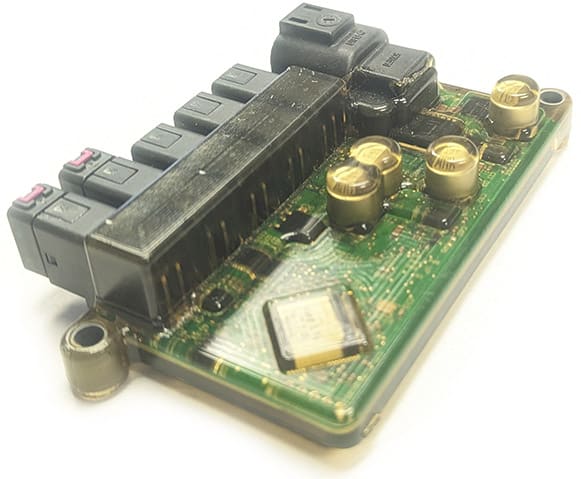
Understanding the mechanisms behind thermal runaway is crucial for effective prevention. The core issue lies in the battery’s electrolyte and electrode materials. When a cell reaches an elevated temperature, decomposition of the solid electrolyte interphase (SEI) layer on the anode can occur, releasing heat and potentially exposing fresh lithium metal. Exothermic reactions between the electrolyte and the electrodes then accelerate. At even higher temperatures, separator melting causes internal short circuits, creating more localized heating. This cycle continues until the active materials decompose, releasing flammable gases and ultimately igniting. For advanced electronics protection, consider using thermally conductive overmolding to enhance heat dissipation and durability.
Thermal runaway in lithium-ion batteries is a critical safety concern that can lead to catastrophic failures if not properly managed. For those interested in understanding the implications of thermal management in various manufacturing processes, a related article discussing design considerations for overmolding and insert molding can provide valuable insights. You can read more about it here: Design Considerations for Overmolding and Insert Molding. This article highlights the importance of effective thermal management strategies that can be applied to enhance the safety and performance of battery systems.
Design Innovations for Enhanced Safety
Preventing thermal runaway begins at the design stage of the battery cell and pack. Engineers employ various strategies to build in safety from the ground up, much like a building’s foundation determines its stability.
Internal Safety Devices
Individual Li-ion cells often incorporate internal safety features designed to interrupt the runaway process before it escalates.
Current Interrupt Device (CID)
The CID is a pressure-activated safety mechanism typically built into the positive terminal of cylindrical cells. It consists of a conductive disc or foil that deforms and breaks the electrical connection when internal cell pressure exceeds a certain threshold. This severs the current path, effectively “turning off” the cell and preventing further charging or discharging, halting the heat generation.
Positive Temperature Coefficient (PTC) Thermistor
A PTC thermistor is a temperature-sensitive resistor that increases its resistance significantly when its temperature rises above a predetermined point. Integrated into the cell’s current path, it acts as a self-resetting fuse. When the cell overheats, the PTC’s resistance increases, limiting the current flow and reducing heat generation. Once the temperature drops, the resistance decreases, and the cell can function normally again.
Safety Vent
Cells are designed with a safety vent, usually a scored or weakened point on the casing. When internal pressure builds excessively during thermal runaway, this vent ruptures, releasing internal gases. This mechanism aims to prevent the cell from exploding due to pressure buildup, allowing for a more controlled release of substances. However, the released gases are often flammable and toxic.
Advanced Separator Materials
The separator is a critical component that physically separates the anode and cathode, preventing internal short circuits. Its integrity is paramount in preventing thermal runaway.
Thermal Shutdown Separators
Traditional polyethylene or polypropylene separators melt at relatively low temperatures (around 130-150°C), leading to internal short circuits and accelerating thermal runaway. Advanced separators are engineered to address this. Multi-layered separators, for example, might incorporate a ceramic coating or a polymer with a higher melting point alongside a lower melting point polymer. When the temperature rises, the lower melting point layer shuts down, preventing the flow of ions. The higher melting point layer then acts as a physical barrier at even higher temperatures, maintaining separation.
Non-flammable Separators
Research is ongoing into developing intrinsically non-flammable separator materials. These often involve inorganic fillers or materials with inherently higher thermal stability. The goal is to prevent the separator itself from contributing to the fuel load during a thermal event.
Battery Management System (BMS) Architecture
The Battery Management System (BMS) is the brain of the battery pack, overseeing its operation and health. A robust BMS is indispensable for preventing thermal runaway.
Temperature Monitoring
The BMS continuously monitors the temperature of individual cells and the overall battery pack. Multiple temperature sensors are strategically placed to detect localized hot spots. If any cell or pack temperature exceeds programmed thresholds, the BMS can initiate protective actions.
Overcharge/Overdischarge Protection
Overcharging or overdischarging are significant stressors that can lead to thermal runaway. Overcharging can cause lithium plating on the anode, which is highly reactive and can lead to dendrite formation and internal short circuits. Overdischarging can degrade cell components and increase internal resistance, leading to heat generation. The BMS accurately monitors cell voltage and terminates charging or discharging when predetermined limits are reached.
Cell Balancing
In a battery pack composed of multiple cells, variations in cell capacity and impedance can lead to some cells being overcharged or overdischarged compared to others. The BMS implements cell balancing algorithms to ensure all cells operate within their healthy voltage range. This can be active balancing, which redistributes charge between cells, or passive balancing, which dissipates excess charge from higher-voltage cells. Even small imbalances, if left unaddressed, can create weak links that are more susceptible to thermal events.
Thermal Management Systems (TMS)

Effective thermal management is paramount, particularly in high-power applications like electric vehicles, where significant heat is generated during charging and discharging. The TMS acts as the battery’s climate control system, keeping its internal temperature within optimal operating limits.
Passive Cooling
Passive cooling relies on natural heat dissipation mechanisms without active energy input.
Air Cooling
Simple battery packs, particularly in less demanding applications, can utilize air cooling. This involves designing the pack to allow ambient air to flow around the cells, carrying away heat. Fins or heat sinks can be incorporated to increase the surface area for heat exchange. This method is generally less effective for high-power applications due to its limited heat removal capacity.
Phase Change Materials (PCMs)
PCMs are substances that absorb and release large amounts of latent heat during a phase transition (e.g., solid to liquid). Encapsulating battery cells within a PCM matrix allows the PCM to absorb excess heat generated by the cells, delaying temperature rise. When the battery cools, the PCM solidifies, releasing the stored heat. This approach acts as a thermal buffer, smoothing out temperature fluctuations.
Active Cooling
Active cooling systems use additional energy to actively remove heat from the battery pack, providing more precise and powerful temperature control.
Liquid Cooling
Liquid cooling is the most common and effective active thermal management strategy for high-performance Li-ion battery packs. A coolant (often a mixture of water and glycol, or dielectric fluid) circulates through channels or plates in direct contact with or in close proximity to the battery cells. The heated coolant is then pumped through a radiator, where it dissipates heat to the ambient air, or through a chiller for more aggressive cooling. This method offers excellent heat transfer capabilities and uniform temperature distribution across the pack.
Refrigerant Cooling (Direct and Indirect)
Refrigerant cooling utilizes a refrigeration cycle to cool the battery. In direct refrigerant cooling, the refrigerant directly circulates around the battery cells. In indirect refrigerant cooling, the refrigerant cools an intermediate liquid, which then circulates through the battery pack. This approach provides powerful cooling capabilities, particularly in hot environments, but adds complexity and energy consumption.
Manufacturing and Quality Control

Even with robust designs, flaws introduced during manufacturing can render safety features ineffective or create new risks. Rigorous quality control is essential to ensure every cell and pack meets safety standards.
Electrode Coating and Alignment Precision
Inconsistent electrode coating can lead to localized variations in active material density, creating hot spots during operation. Misalignment of electrodes can also reduce the effective surface area, leading to current crowding and increased local temperatures. Precision in these stages is paramount to uniform electrochemical performance and heat distribution.
Contamination Prevention
Microscopic metallic particles or other foreign contaminants introduced during manufacturing can become entrapped within the cell. These contaminants can pierce the separator, leading to internal short circuits. Cleanroom environments and stringent material handling protocols are critical to prevent such contamination. Imagine a tiny splinter in a delicate machine; a microscopic impurity can cause catastrophic failure in a battery.
Defect Detection and Screening
Various non-destructive testing methods are employed to detect hidden defects in cells before they are assembled into packs.
X-ray Imaging
X-ray imaging allows for the visualization of internal cell structures, revealing misalignments, foreign particles, or damaged components that might not be visible externally. This provides a detailed “snapshot” of the cell’s internal integrity.
Electrical Testing (Ohmic Testing, Voltage Profile Analysis)
Every cell undergoes extensive electrical testing to ensure its electrical parameters match specifications. Deviations in internal resistance (ohmic testing) or anomalies in the voltage profile during charge/discharge cycles can indicate latent defects or inconsistencies in manufacturing. These electrical “fingerprints” can reveal hidden problems.
Thermal runaway in lithium-ion batteries is a critical safety concern that has garnered significant attention in recent years. Understanding the mechanisms behind this phenomenon is essential for improving battery safety and performance. For those interested in exploring related topics, a comprehensive article on FIPS security molding can provide insights into how advanced manufacturing techniques can enhance the safety features of electronic devices. You can read more about it in this informative piece on FIPS security molding.
Operational Safety and End-User Practices
<?xml encoding=”UTF-8″>
| Parameter | Description | Typical Values / Range | Unit |
|---|---|---|---|
| Onset Temperature | Temperature at which thermal runaway initiates | 150 – 200 | °C |
| Maximum Temperature | Peak temperature reached during thermal runaway | 500 – 1000 | °C |
| Heat Generation Rate | Rate of heat release during thermal runaway | 100 – 1000 | W/g |
| Pressure Increase | Internal pressure rise due to gas generation | Up to 10 | MPa |
| Time to Thermal Runaway | Duration from onset to peak temperature | Seconds to minutes | Time |
| Gas Volume Released | Volume of gases emitted during thermal runaway | Up to 1 | Liters per cell |
| Energy Released | Total energy released during thermal runaway | 100 – 500 | kJ per cell |
Even the safest battery designs can be compromised by improper handling and usage. Ultimately, the end-user plays a critical role in preventing thermal runaway.
Adherence to Manufacturer Specifications
Charging and discharging Li-ion batteries should always adhere strictly to the manufacturer’s specified voltage and current limits. Using chargers not designed for the specific battery, or exceeding recommended discharge rates, can lead to overheating and cell degradation. The manufacturer’s guidelines are not suggestions; they are engineering boundaries.
Avoiding Physical Damage
Li-ion cells are susceptible to physical damage. Punctures, crushing, or heavy impacts can deform internal components, leading to internal short circuits and potential thermal runaway. Devices powered by Li-ion batteries should be handled with care and protected from falls or blunt force. A physically compromised cell is a ticking time bomb.
Proper Storage Conditions
Storing Li-ion batteries under extreme temperatures (both hot and cold) can accelerate degradation and increase the risk of thermal runaway. Batteries should be stored in a cool, dry place, ideally at a partial state of charge (e.g., 50%) rather than fully charged or fully discharged, as recommended by the manufacturer. Prolonged exposure to high temperatures, for example, can permanently reduce battery life and increase internal resistance, making the cell more prone to overheating.
Early Detection of Malfunctions
Users should be vigilant for signs of battery malfunction. Swelling of the battery, unusual heat generation during normal operation or charging, a burning smell, or smoke are all indicators of a potentially imminent thermal runaway event. If any of these signs are observed, the device should be immediately disconnected from power, moved to a safe, non-flammable location, and handled with extreme caution. Professional assessment should be sought. Ignoring these warning signs is akin to ignoring the smoke detector.
In conclusion, preventing Li-ion thermal runaway is a multi-faceted challenge requiring a holistic approach. It involves sophisticated cell and pack design, intelligent battery management systems, efficient thermal management, stringent manufacturing quality control, and responsible end-user practices. Each layer of safety acts as a redundancy, bolstering the overall integrity of the battery system and mitigating the inherent risks associated with high-energy-density storage. As Li-ion technology continues to evolve, so too will these safety measures, ensuring that the benefits of powerful, portable energy can be realized with minimal risk.
Give us a call to discuss your next project
FAQs
What is lithium-ion battery thermal runaway?
Thermal runaway in lithium-ion batteries is a chain reaction where the battery’s temperature rapidly increases, leading to the breakdown of internal components, release of gases, and potentially fire or explosion.
What causes thermal runaway in lithium-ion batteries?
Thermal runaway can be triggered by factors such as internal short circuits, overcharging, physical damage, manufacturing defects, or exposure to high temperatures.
What are the signs of thermal runaway in a lithium-ion battery?
Signs include swelling or bulging of the battery, excessive heat generation, smoke, unusual odors, and in severe cases, flames or explosions.
How can thermal runaway be prevented in lithium-ion batteries?
Prevention methods include using proper charging equipment, avoiding physical damage, maintaining batteries within recommended temperature ranges, and employing battery management systems to monitor and control battery conditions.
What should you do if a lithium-ion battery enters thermal runaway?
If thermal runaway occurs, immediately move away from the battery, avoid inhaling fumes, and if safe, use a Class D fire extinguisher or sand to extinguish flames. Do not use water, and seek professional assistance for disposal.
### Utilizing Overmolding for Enhanced Battery Safety Incorporating overmolding techniques in lithium-ion battery design can significantly reduce the risk of thermal runaway. By applying a protective layer around critical components, overmolding enhances thermal insulation and structural integrity, thereby minimizing the likelihood of external damage and heat buildup. This proactive approach not only aids in maintaining optimal operating temperatures but also contributes to the overall durability of the battery, ensuring safer usage in various applications.