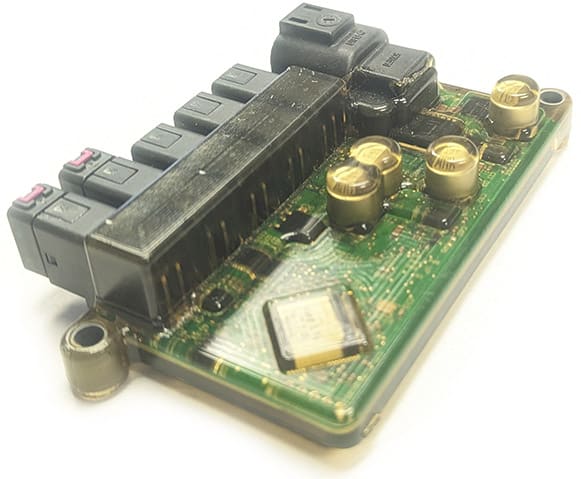
The iterative development process for new products relies heavily on prototyping. For decades, various materials and methods have been employed to create physical representations of designs, allowing engineers and designers to evaluate form, fit, and function before committing to mass production. In recent years, plastic prototypes have emerged as a significant tool in this process, offering distinct advantages over traditional materials and techniques. This article explores the evolving role of plastic prototypes in modern product design, detailing their benefits, applications, and the technologies that facilitate their creation.
Prototyping, at its core, is about making ideas tangible. Historically, this involved skilled artisans meticulously crafting models by hand. Early prototypes were often made from wood, clay, or metal, requiring significant time, cost, and specialized expertise. These methods, while effective for their time, presented bottlenecks in the design cycle.
Challenges of Traditional Prototyping
Traditional prototyping methods, though foundational, posed several challenges. The lengthy lead times associated with handcrafted models delayed design iterations. Material constraints often limited the complexity of shapes that could be accurately represented. Furthermore, the cost associated with skilled labor and specialized tools made extensive prototyping financially impractical for many small and medium-sized enterprises. The “fail fast, fail cheap” mantra, now central to agile development, was difficult to achieve under these circumstances. Each prototype was a significant investment, making designers hesitant to experiment freely.
Emergence of Rapid Prototyping
The late 20th century saw the advent of “rapid prototyping” techniques, primarily driven by the development of additive manufacturing, commonly known as 3D printing. These technologies revolutionized the prototyping landscape by enabling the creation of complex geometries directly from digital design files. Initial rapid prototyping technologies primarily utilized polymers, laying the groundwork for the widespread adoption of plastic prototypes. This shift marked a fundamental change, moving from subtractive (removing material) or formative (shaping material) processes to additive ones (building layer by layer).
In the realm of product development, creating a plastic prototype is a crucial step that allows designers and engineers to visualize and test their concepts before moving to full-scale production. For those interested in exploring the intricacies of this process, a related article can be found at Overmold Express, which delves into key insights about prototyping and its impact on manufacturing efficiency. This resource provides valuable information on the benefits of utilizing advanced prototyping techniques, ensuring that your product meets both design specifications and market demands.
Advantages of Plastic Prototypes
Plastic prototypes offer a compelling set of advantages that have contributed to their increasing prevalence in product development. These benefits transcend mere cost savings, impacting design flexibility, speed to market, and the overall quality of the final product.
Cost-Effectiveness
Compared to prototypes made from metals or other advanced materials, plastic prototypes are generally more economical. The raw materials used in plastic prototyping, such as ABS, PLA, PETG, and various resins, are typically less expensive. Furthermore, the energy consumption for 3D printing plastics can be lower than for metal fabrication. This cost efficiency allows design teams to produce multiple iterations of a design without incurring prohibitive expenses, fostering a more experimental and iterative approach. Think of it as having the ability to sketch with a pen rather than a chisel – mistakes are easier and cheaper to correct.
Speed and Efficiency
The speed with which plastic prototypes can be produced is a significant advantage. Additive manufacturing processes can generate complex parts in hours or days, rather than weeks or months. This rapid turnaround time accelerates the design cycle, allowing engineers to quickly test hypotheses, validate designs, and make necessary adjustments. This agility is crucial in today’s fast-paced market, where time to market can be a decisive factor in a product’s success. This quick iteration cycle is akin to rapid-firing rounds during target practice; you can adjust your aim much faster if you get immediate feedback.
Design Flexibility and Complexity
Plastic prototyping technologies, particularly 3D printing, excel at producing intricate geometries that would be difficult or impossible to achieve with traditional manufacturing methods. Designs with internal channels, organic shapes, or complex interlocking features can be fabricated with relative ease. This design freedom empowers engineers and designers to push the boundaries of innovation, creating more functional, ergonomic, or aesthetically pleasing products without being constrained by manufacturing limitations. This flexibility is like having an unburdened imagination; you’re no longer limited by what your tools can do, but by what your mind can conceive.
Material Choice and Properties
The range of plastics available for prototyping is vast, each offering different mechanical, thermal, and aesthetic properties. From rigid, impact-resistant ABS to flexible TPEs, and from heat-resistant ULTEM to transparent resins, designers can select materials that closely mimic the properties of the final production material. This allows for more accurate testing of specific functional requirements, such as stress resistance, elasticity, or thermal performance. The ability to simulate real-world conditions with a prototype reduces the likelihood of costly failures later in the production process.
Key Technologies in Plastic Prototyping
The widespread adoption of plastic prototypes has been fueled by continuous advancements in additive manufacturing technologies. Each technology offers a unique set of capabilities, making it suitable for different applications and design requirements.
Fused Deposition Modeling (FDM)
FDM is one of the most widely known and accessible 3D printing technologies. It works by extruding a thermoplastic filament, layer by layer, onto a build platform. The material is heated to its melting point and then deposited precisely according to the digital model.
Applications of FDM
FDM is highly versatile and commonly used for functional prototypes, concept models, and even some end-use parts. Its ability to work with a variety of engineering thermoplastics like ABS, PLA, PETG, and Nylon makes it suitable for diverse applications. Designers often use FDM for early-stage design verification, form and fit testing, and creating assembly prototypes due to its relatively low cost and speed. It serves as a workhorse for many prototyping needs.
Limitations of FDM
While offering numerous benefits, FDM also has limitations. Parts produced via FDM often exhibit visible layer lines, affecting surface finish. Achieving very fine details can be challenging, and the anisotropic nature of FDM parts (different strength properties in different directions) can be a factor for highly stressed components.
Stereolithography (SLA)
SLA was one of the first 3D printing technologies developed. It utilizes a UV laser to selectively cure successive layers of photopolymer resin in a vat, solidifying the liquid material into a 3D object.
Advantages of SLA
SLA is renowned for its ability to produce highly detailed parts with smooth surface finishes. It allows for the creation of intricate geometries and thin walls, making it ideal for prototypes requiring high aesthetic quality or fine features. The range of resins available also enables the creation of prototypes with specific optical properties (e.g., clear parts) or mechanical characteristics (e.g., rigid, flexible, or heat-resistant). If aesthetics are paramount, SLA often leads the way.
Considerations for SLA
SLA prototypes can sometimes be more brittle than FDM parts, depending on the resin used. Post-processing, including washing and post-curing with UV light, is typically required to fully solidify the material and achieve optimal mechanical properties.
Selective Laser Sintering (SLS)
SLS is a powder-bed fusion technology that uses a high-power laser to selectively fuse small particles of plastic powder (typically Nylon) into a solid structure. After each layer is fused, a new layer of powder is spread over the build area, and the process repeats.
Benefits of SLS
SLS produces strong, functional prototypes that are often suitable for demanding applications. Unlike FDM or SLA, SLS prototypes do not require support structures during printing, as the unfused powder acts as a self-supporting medium. This allows for greater design freedom, enabling the creation of complex, interlocking parts or assemblies without additional fabrication steps. SLS parts also exhibit isotropic properties, meaning their strength is consistent in all directions.
Applications of SLS
SLS is a preferred choice for functional testing, low-volume production of end-use parts, and prototypes that need to withstand significant stress. Its material versatility, particularly with various Nylon grades, makes it invaluable for challenging mechanical applications.
Integrating Plastic Prototypes into the Design Workflow
The effective integration of plastic prototypes into the product design lifecycle can significantly streamline development and reduce risks. It’s not just about creating a part, but about creating an intelligent feedback loop.
Concept Validation and Form Studies
In the initial stages of design, plastic prototypes serve as tangible concept models. Designers can quickly print multiple variations of a proposed design to evaluate aesthetics, ergonomics, and overall form factor. This allows for early identification of design flaws or areas for improvement, before significant resources are committed to detailed engineering. Holding a physical model in hand often reveals aspects that are not apparent on a screen.
Functional Testing and Performance Evaluation
Beyond aesthetics, plastic prototypes are crucial for functional testing. Engineers can create working prototypes to test mechanisms, assess assembly processes, and evaluate performance under simulated operating conditions. For instance, a complex gear train or a snap-fit enclosure can be prototyped in plastic to ensure all components fit and function as intended. This early-stage functional validation can prevent costly rework cycles later in development.
Iterative Design and Feedback Loops
The speed and affordability of plastic prototyping foster an iterative design philosophy. Designers can quickly implement changes based on feedback from testing or stakeholders, produce a new prototype, and re-evaluate. This rapid feedback loop allows for continuous refinement, leading to more robust and user-friendly products. It’s like having a conversation with your design, where each prototype offers a new line of dialogue.
Marketing and Communication Tools
Plastic prototypes are not just for engineering; they are also powerful communication tools. They can be used to present concepts to clients, investors, or focus groups, providing a tangible representation of the product. This can significantly enhance understanding and garner valuable feedback, aiding in decision-making and securing buy-in. A physical model lends credibility and clarity that a digital rendering alone cannot offer.
In the realm of product development, creating a plastic prototype is a crucial step that allows designers to test and refine their ideas before moving to full-scale production. For those interested in learning more about the various techniques and benefits of prototyping, a related article can provide valuable insights. You can explore this topic further by visiting this informative resource, which discusses the importance of prototyping in detail. Understanding these processes can significantly enhance the efficiency and effectiveness of bringing new products to market.
Challenges and Future Trends
| Metric | Description | Typical Value | Unit |
|---|---|---|---|
| Material Type | Common plastics used for prototyping | ABS, PLA, Nylon, PETG | – |
| Prototype Accuracy | Dimensional tolerance achievable | ±0.1 to ±0.5 | mm |
| Surface Finish | Typical surface roughness after printing or molding | 10 to 30 | microns (Ra) |
| Production Time | Time to produce a single prototype | 4 to 48 | hours |
| Prototype Weight | Average weight of a small plastic prototype | 10 to 200 | grams |
| Cost per Prototype | Typical cost range for a single prototype | 20 to 500 | units |
| Mechanical Strength | Tensile strength of prototype material | 30 to 60 | MPa |
| Thermal Resistance | Maximum operating temperature | 60 to 110 | °C |
While plastic prototyping offers numerous benefits, it also presents certain challenges and is an area of continuous evolution.
Material Limitations
Despite the expanding range of plastic materials, some applications still demand properties that are difficult to achieve with current prototyping plastics. For instance, extreme temperature resistance, high chemical inertness, or specific electrical conductivity might require alternative prototyping methods or materials. The pursuit of more advanced and specialized plastic resins remains an active area of research.
Post-Processing Requirements
Many plastic prototyping processes, especially SLA, require significant post-processing steps such as cleaning, support removal, sanding, and painting to achieve a production-ready finish. This can add to the overall time and cost, especially for high-volume prototyping. Automation of post-processing remains a key area for improvement.
Scalability for Production
While plastic prototypes are excellent for low-volume and iterative development, scaling up to mass production often requires a transition to traditional manufacturing methods like injection molding. Bridging this gap effectively, ensuring that a prototyped design translates seamlessly into a manufacturable product, is a critical consideration. This transition often involves further design optimization for manufacturability (DFM).
Emerging Technologies and Materials
The field of plastic prototyping is dynamic. We are seeing constant innovation in 3D printing technologies, with faster machines, larger build volumes, and multi-material printing capabilities becoming more common. New plastic materials, including composites, biocompatible polymers, and smart materials with integrated functionalities, are also continually being developed, further expanding the potential applications of plastic prototypes. The integration of artificial intelligence and machine learning into the design and prototyping workflow also promises to optimize material selection, print parameters, and design iteration processes.
In conclusion, plastic prototypes have fundamentally transformed product design. By offering a blend of cost-effectiveness, speed, and design flexibility, they empower designers and engineers to iterate faster, test more thoroughly, and innovate more freely. As technologies continue to advance and new materials emerge, the role of plastic prototypes in shaping the products of tomorrow will undoubtedly continue to expand, serving as the essential bridge between concept and reality.
Lets talk about your next project
FAQs
What is a plastic prototype?
A plastic prototype is an early sample or model of a product made from plastic materials. It is used to evaluate design, functionality, and usability before mass production.
What are the common methods for creating plastic prototypes?
Common methods include 3D printing, CNC machining, injection molding, and vacuum forming. Each method varies in cost, speed, and accuracy depending on the project requirements.
Why are plastic prototypes important in product development?
Plastic prototypes allow designers and engineers to test form, fit, and function, identify design flaws, and make necessary adjustments early in the development process, reducing costs and time to market.
What types of plastics are typically used for prototyping?
Materials such as ABS, PLA, polycarbonate, and nylon are frequently used due to their durability, ease of fabrication, and similarity to production plastics.
How long does it usually take to produce a plastic prototype?
The production time varies based on the complexity and method used but can range from a few hours with 3D printing to several weeks for injection molding prototypes.