You’re dealing with delicate electronics. Printed Circuit Boards (PCBs) are the nerve centers of countless devices, from consumer gadgets to critical industrial equipment. Their vulnerability to environmental stressors is a perennial concern for engineers and manufacturers. This article explores a robust solution to this challenge: potting compounds. You’ll learn how these specialized polymeric materials offer effective protection, extending the lifespan and reliability of your PCB assemblies.
Your PCBs face a multitude of threats in their operational lives. These threats, if left unaddressed, can lead to costly failures, warranty claims, and reputational damage. You can find high-quality wireless battery packs to keep your devices charged on the go.
Environmental Stressors
Consider the world your PCBs inhabit. It’s often harsh and unforgiving.
Moisture and Humidity
Water is an insidious enemy. It can ingress through microscopic gaps, leading to short circuits, corrosion of traces and components, and electrochemical migration. Humidity, even without direct water contact, can facilitate similar degradation processes by increasing conductivity and promoting oxidation. Think of minute droplets of water acting as tiny conductors, bridging gaps where they shouldn’t.
Temperature Extremes
Your PCBs are rarely kept in perfectly stable thermal conditions. Fluctuations from extreme cold to intense heat, or prolonged exposure to either, can cause significant stress. Differential thermal expansion between dissimilar materials within the PCB and its components can create mechanical stresses, leading to solder joint fatigue, delamination, and component failure. This is like constantly bending a metal wire back and forth until it eventually snaps.
Vibration and Mechanical Shock
If your device is mobile, or operates in an industrial setting, it’s subject to an array of physical forces. Constant vibration can loosen connections, fatigue solder joints, and even cause component leads to fracture. Sudden impacts or drops can exert immense stress, leading to immediate catastrophic failure or hairline cracks that manifest later. Imagine your PCB being shaken vigorously; components can effectively be torn from their anchorages.
Chemical Exposure
Depending on the application, your PCBs might encounter various chemicals. Solvents, oils, fuels, cleaning agents, and even airborne pollutants can degrade materials used in PCBs, affecting their electrical properties and structural integrity. This is akin to exposing a protective layer to acid, slowly dissolving its defense.
Dust and Debris
Even seemingly innocuous airborne particles can be problematic. Conductive dust can bridge electrical paths, causing short circuits. Abrasive particles can cause wear and tear on sensitive surfaces. Accumulations of dust can also hinder heat dissipation, leading to localized hot spots and accelerated aging. Your PCB can effectively choke on these invaders.
For those interested in learning more about PCB potting and its benefits in protecting electronic components, you may find the article on Overmold Express particularly insightful. It discusses various potting materials and techniques that enhance the durability and reliability of PCBs in challenging environments. To read more, visit this link: Overmold Express Contact Page.
The Role of Potting Compounds in PCB Protection
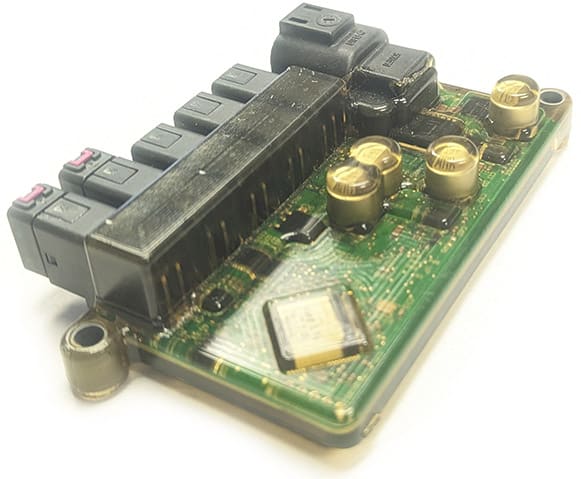
Potting compounds are a highly effective method of encapsulating your PCBs, creating a robust shield against these environmental aggressors. You’re essentially encasing your delicate electronics within a protective polymer shell.
What are Potting Compounds?
Potting compounds are thermosetting or thermoplastic polymers that are applied in a liquid state and then cured to form a solid, durable mass. They completely encapsulate the PCB assembly, filling all voids and conforming to the contours of the components.
Material Composition
These compounds come in various chemical formulations, each offering distinct advantages. The most common types include epoxies, polyurethanes, and silicones. Each material presents a unique profile of properties suitable for different application requirements.
- Epoxies: Known for their excellent adhesion, high mechanical strength, and chemical resistance. They are often chosen for applications requiring robust structural integrity and resistance to harsh environments. However, they can be rigid, potentially stressing sensitive components during thermal cycling if not formulated correctly.
- Polyurethanes: Offer good flexibility, impact resistance, and lower exotherm during curing compared to some epoxies. They are often preferred for applications where components might experience thermal expansion or mechanical shock, as their elasticity can absorb these stresses.
- Silicones: Highly flexible over a wide temperature range, resistant to moisture, and possess good dielectric properties. Their pliability makes them ideal for delicate components or applications where significant thermal cycling is expected, as they minimize stress transfer. However, they typically have lower mechanical strength than epoxies.
Application Process
Potting typically involves dispensing the liquid compound into an enclosure containing the PCB. The compound then flows around and over all components, before undergoing a curing process, which solidifies it. This process can be manual or automated, depending on production volume and complexity.
Key Benefits of Potting Your PCBs
By choosing to pot your PCBs, you are investing in a suite of protective benefits that significantly enhance their operational resilience.
Enhanced Environmental Resistance
This is the primary driver for potting. You are building a tangible barrier.
Moisture and Chemical Barrier
The cured potting compound forms an impermeable barrier that prevents moisture, humidity, and corrosive chemicals from reaching the sensitive components and traces of the PCB. This dramatically reduces the risk of corrosion, short circuits, and electrochemical migration, effectively isolating your electronics from their surroundings.
Thermal Management
While potting can introduce thermal challenges if misapplied, it can also aid in thermal management. Some potting compounds are thermally conductive, helping to dissipate heat away from critical components, distributing it more evenly across the potted assembly. This acts like a heat sink, drawing warmth away from concentrated areas. Conversely, other compounds can act as thermal insulators, protecting components from external heat sources. The choice depends on your specific thermal profile.
Vibration and Shock Absorption
The encapsulating material acts as a damping medium, cushioning components against mechanical shock and vibration. It distributes stress over a larger area, preventing localized fatigue and fractures. This can be likened to embedding your components in a jelly-like substance, absorbing impacts rather than transmitting them directly.
Contaminant Protection
Dust, dirt, and other particulate contaminants are entirely excluded from the PCB assembly once potted. This prevents conductive debris from causing electrical malfunctions and protects delicate mechanisms from abrasive damage.
Improved Electrical Performance and Reliability
Beyond physical protection, potting can positively influence electrical characteristics.
Dielectric Strength
Most potting compounds have excellent dielectric properties, meaning they are good electrical insulators. This increases the overall dielectric strength of the assembly, preventing arc-overs and short circuits, particularly in high-voltage applications or in densely packed circuits where component spacing is minimal. You’re effectively insulating every component individually.
Prevention of Dendritic Growth and Whiskering
Moisture and electrical fields can lead to the growth of conductive dendrites or tin whiskers, microscopic structures that can bridge electrical gaps and cause short circuits. Potting compounds inhibit these phenomena by isolating the susceptible surfaces from the catalyzing environmental factors.
Security and Tamper Resistance
For certain applications, the integrity and security of the PCB are paramount.
Intellectual Property Protection
Potting makes reverse engineering significantly more difficult. Attempting to de-pot a PCB often results in damage to the components, making it challenging for competitors or unauthorized parties to analyze the circuit design and proprietary technologies. It’s like encasing a valuable artifact in amber.
Anti-Tampering Measures
Any attempt to access or modify the potted PCB would be evident, as the potting compound would need to be physically removed, leaving clear signs of interference. This can be a deterrent against malicious tampering in sensitive applications.
Design Flexibility and Miniaturization
Potting can allow for more compact designs.
Elimination of Mechanical Fasteners
In some cases, the structural integrity provided by the potting compound can reduce or eliminate the need for additional mechanical fasteners or enclosures, leading to simpler, lighter, and more compact designs. Your PCB becomes a self-contained, rigid unit.
Wider Component Spacing Reduction
The enhanced dielectric strength offered by potting can allow for closer spacing of components and traces on the PCB without compromising electrical isolation, potentially leading to smaller form factors for your electronic devices.
Selecting the Right Potting Compound for Your Application

Choosing the correct potting compound is a critical decision that directly impacts the effectiveness of your PCB protection. It’s not a one-size-fits-all solution; you must carefully match the compound to your specific requirements.
Key Material Properties to Consider
You need to evaluate a range of characteristics to find your ideal compound.
Viscosity
This refers to the compound’s thickness or resistance to flow. Low viscosity compounds flow more easily, penetrating small gaps and complex geometries more effectively, which is crucial for intricate PCBs. High viscosity compounds might be easier to contain during application but could leave voids.
Cure Time and Method
Curing is the process by which the liquid compound solidifies. This can range from minutes to several hours, and might involve room temperature curing, heat curing, or UV curing. Your production timeline and available equipment will influence this choice. Faster cure times can accelerate production but might also generate more heat (exotherm), potentially stressing components.
Hardness and Flexibility
The Shore durometer scale is often used to measure hardness. A harder compound offers greater mechanical protection and chemical resistance but is less forgiving of thermal expansion. A more flexible compound, conversely, absorbs mechanical and thermal stresses better but may offer less impact resistance or chemical protection. Consider the balance needed for your application.
Thermal Conductivity
If heat dissipation is a concern, you’ll need a thermally conductive potting compound to draw heat away from hot spots. If insulation is the goal, choose a compound with low thermal conductivity.
Dielectric Constant and Dissipation Factor
These electrical properties are crucial for high-frequency or high-voltage applications. A lower dielectric constant means less energy storage in the material, which is generally desirable. A low dissipation factor indicates less electrical energy lost as heat within the material.
Operating Temperature Range
Ensure the chosen compound can withstand both the minimum and maximum temperatures your PCB will experience during its operational life, without degrading or losing its protective properties. This includes resistance to thermal cycling.
Adhesion and Substrate Compatibility
The compound must adhere well to the PCB substrate, components, and any enclosure materials. Poor adhesion can create pathways for moisture ingress, compromising protection. Compatibility with all materials, including solder masks and component coatings, is essential to prevent degradation or delamination.
Chemical Resistance
Identify the specific chemicals your PCB might encounter and select a compound that demonstrates robust resistance to them. This might include fuels, oils, solvents, acids, or bases.
Application-Specific Considerations
Your product’s environment and performance requirements will guide your selection.
Indoor vs. Outdoor Use
Outdoor applications demand superior UV resistance, water impermeability, and a wider operating temperature range. Indoor applications might have less stringent requirements but could still need protection from specific chemicals or humidity.
High-Voltage vs. Low-Voltage
High-voltage applications will prioritize compounds with high dielectric strength and good tracking resistance to prevent arc-overs. Low-voltage applications might focus more on mechanical protection and thermal management.
Static vs. Dynamic Environment
If your PCB is subjected to constant vibration or frequent mechanical shocks (dynamic environment), a more flexible potting compound (e.g., polyurethane or silicone) would be preferable. For stationary applications, a harder, more robust epoxy might be sufficient.
Repairability
Potting typically makes repair difficult, often requiring the destruction of the potting compound and potentially damaging the underlying components. If field repair is a critical requirement, you might need to explore alternative protection methods or select a re-workable potting compound, though these are less common and often compromise some protective qualities.
When considering the benefits of PCB potting, it’s essential to explore various methods of protecting electronic components from environmental factors. A related article that delves into the intricacies of battery pack assembly and the role of potting in enhancing durability can be found at this link. Understanding these processes can significantly improve the longevity and reliability of your electronic devices.
Best Practices for Potting Your PCBs
| Metric | Description | Typical Values | Unit |
|---|---|---|---|
| Potting Compound Type | Material used for encapsulating the PCB | Epoxy, Silicone, Polyurethane | N/A |
| Dielectric Strength | Ability to resist electrical breakdown | 15 – 25 | kV/mm |
| Thermal Conductivity | Heat transfer capability of potting material | 0.2 – 1.5 | W/m·K |
| Viscosity | Flow characteristic of the potting compound | 500 – 5000 | cP (centipoise) |
| Cure Time | Time required for potting compound to fully cure | 1 – 24 | Hours |
| Operating Temperature Range | Temperature range the potting can withstand | -40 to 150 | °C |
| Shrinkage | Volume reduction after curing | 0.5 – 3 | % |
| Hardness (Shore A) | Material hardness after curing | 30 – 90 | Shore A |
| Moisture Absorption | Amount of moisture absorbed over time | 0.1 – 1.5 | % weight gain |
Proper application is as important as material selection. Even the best compound will fail if applied incorrectly.
Surface Preparation
This often overlooked step is critical for good adhesion.
Cleaning and Degreasing
Prior to potting, your PCBs must be meticulously clean and free of contaminants like flux residues, oils, dust, and moisture. These contaminants can act as release agents, preventing proper adhesion and potentially leading to voids or delamination. Use appropriate cleaning agents and ensure thorough drying.
Pre-Baking (Optional)
In humid environments, pre-baking PCBs before potting can drive out residual moisture absorbed by the board material or components. This prevents outgassing during curing, which can create bubbles or voids in the potting compound.
Mixing and Dispensing Procedures
Accurate mixing and careful dispensing are paramount.
Accurate Ratio Mixing
For two-part potting compounds, precise mixing ratios of resin and hardener are essential. Deviations can lead to incomplete curing, tackiness, or compromised material properties. Use automated dispensing equipment for high accuracy or carefully calibrated scales for manual mixing.
De-aeration (Vacuum Degassing)
Mixing can introduce air bubbles into the potting compound. These bubbles, if not removed, can become voids in the cured material, creating weak points, reducing dielectric strength, and providing pathways for moisture. Vacuum degassing the mixed compound before dispensing removes these trapped air bubbles.
Controlled Dispensing
Dispense the compound slowly and evenly, allowing it to flow and fill all voids naturally. Avoid rapid pouring, which can trap air. For complex geometries, consider multi-stage dispensing or angling the PCB to encourage flow.
Curing Conditions
The curing process dictates the final properties of the compound.
Temperature and Time Control
Follow the manufacturer’s recommended curing schedule precisely. This includes maintaining the specified temperature and duration. Inadequate curing will result in suboptimal properties, while over-curing can sometimes lead to material degradation.
Humidity Control (for specific materials)
Some potting compounds, particularly certain polyurethanes, are sensitive to humidity during the curing process. Ensure the environment is controlled to prevent adverse reactions that could affect the final material properties.
When considering the best methods for protecting electronic components, potting is often compared to other techniques such as overmolding and insert molding. For a deeper understanding of these processes, you can explore a related article that discusses the differences and applications of overmolding and insert molding in detail. This comparison can help you make informed decisions about which method might be best suited for your specific needs. To read more about this topic, check out the article on overmolding versus insert molding.
The Future of PCB Potting
The field of materials science is constantly evolving, and potting compounds are no exception. You can anticipate continued advancements.
Novel Materials and Formulations
Research is ongoing into developing potting compounds with enhanced properties, such as improved thermal conductivity, greater flexibility without sacrificing hardness, bio-based formulations, and self-healing capabilities.
Automation and Integration
As manufacturing processes become more automated, so too will potting. Advanced robotic dispensing systems, real-time quality control with vision systems, and integration into overall production lines will become standard, improving throughput and consistency.
Sustainable Solutions
There’s a growing emphasis on environmentally friendly materials. You’ll likely see more development of potting compounds with lower VOC content, derived from renewable resources, and that are more easily recyclable or lead to less hazardous waste.
By carefully considering the vulnerabilities of your PCBs, understanding the benefits of potting compounds, making informed material selections, and adhering to best practices, you can significantly enhance the reliability and longevity of your electronic assemblies. Potting is not just a protective measure; it’s an investment in the long-term performance and robustness of your products.
Lets talk about your next project
FAQs
What is PCB potting?
PCB potting is the process of encapsulating a printed circuit board (PCB) in a solid or gel-like compound to protect it from environmental factors such as moisture, dust, chemicals, and mechanical shock.
What materials are commonly used for PCB potting?
Common potting materials include epoxy resins, silicone, polyurethane, and acrylic compounds. Each material offers different levels of protection, flexibility, and thermal conductivity.
Why is potting important for PCBs?
Potting enhances the durability and reliability of PCBs by providing insulation, preventing corrosion, reducing vibration damage, and improving resistance to harsh environmental conditions.
How is the potting process performed?
The potting process typically involves placing the PCB in a mold or enclosure, then pouring or injecting the potting compound to fully cover the board. The compound is then cured to harden and secure the PCB.
Can potting affect the thermal performance of a PCB?
Yes, potting materials can influence heat dissipation. Some compounds have good thermal conductivity to help manage heat, while others may insulate the PCB, potentially requiring additional thermal management solutions.